


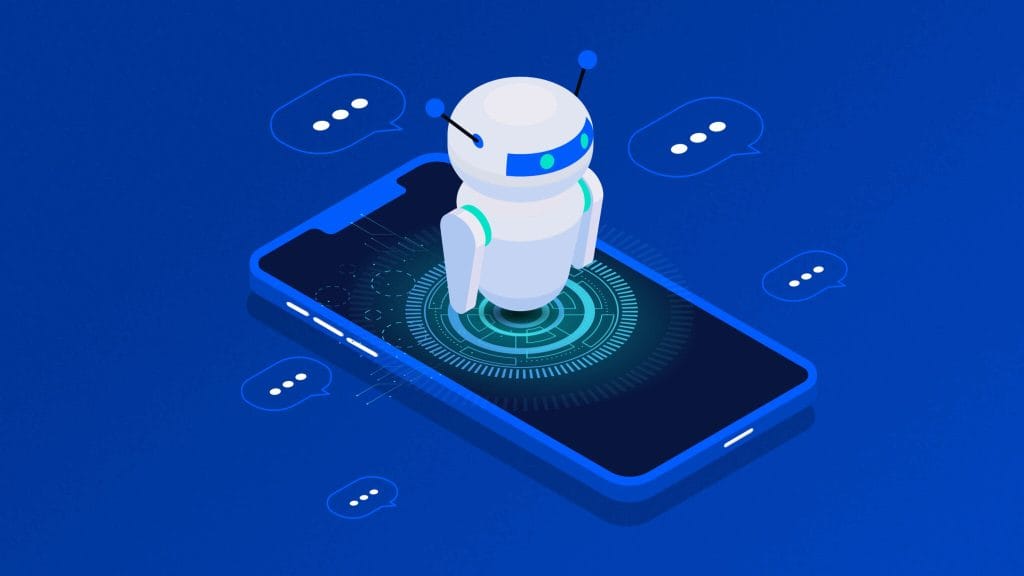
Today, people want quick and accurate answers when it comes to choosing and acquiring products and services. That’s where the term conversational user interface comes in. Google Assistant is a great example of a conversational user interface that is widely used in everyday life. Communicating in a conversational work environment is on par with talking to a real human assistant.
However, technology is constantly evolving and people expect more from it. With patience and higher expectations, companies are trying to improve their products to win the favor of potential customers. Research reports that over 45% of organizations are using chatbots for marketing. Additionally, 741% of customers report having used chat assistants to purchase products or get more information about them online.
Conversational UI is the future. These types of chatbots have many advantages, but they also have their share of disadvantages. What are these advantages, disadvantages, and challenges?;
What is the conversational interface (CUI)?;
A conversational user interface is an NLP (natural language processing) enabled solution that mimics the conversational style of humans. That is, it speaks and reacts like a human. Popular examples of conversational user interfaces include Siri, Alexa, Microsoft's Cortana, Bixby, IBO Watson Assistant, Mitsuku, and others.
These conversational UIs can make things easier in all areas of life. For example, a conversational interface can dim the lights, play music, or even pay the electricity bill. Automatically answering calls, providing precise directions, and allowing the user to control car functions with simple commands are some of the capabilities of Conversational User Interface.
How can a business benefit from a chat user interface?
Organizations can enjoy many benefits by using a chat UI. Since people have been using it for quite some time, they now take it for granted. However, chatbots have come a long way from the days of AOL, Cleverbot, and Siri to Microsoft Bing AI in 2024. Here are some notable benefits of chat UIs.
Faster response time
Companies can ensure fast and accurate customer support through customer support chatbots. Customers can type text or speak to get help. They don't have to wait on long lines or settle for unsatisfactory responses.
Ease of use
People use the chat interface frequently because it is convenient and easily accessible. These factors contribute to its increased usage and popularity.
Beyond convenience
Conversational user interfaces offer more than just ease of use. They are a benefit for people with disabilities, such as those with vision or hearing impairments. These individuals can use AI conversational tools to set reminders, schedule appointments, search for information online, and get mental health support if needed.
Customized experiences
The Conversational User Interface (CUI) gathers valuable data from past interactions and user experiences and allows users to define their preferences. In addition, the NLP-based processing system and machine learning algorithms focus more on intent than words to deliver a more personalized experience.
24/7/365 availability
Unlike businesses, these CUIs do not have working hours. Companies and users can use them at any time of the day and get answers/solutions to their queries.
Huge cost savings
Instead of hiring customer service workers to work multiple shifts, chatbots can interact with customers and answer their questions. Business employees can focus on other productive tasks. At the same time, instant responses strengthen a business's reputation.
Challenges & Solutions for Developing a Conversational UI
The above section focused on the benefits of a conversational user interface. Here are some challenges in developing a conversational user interface for businesses.
Inability to handle complex queries/tasks
Most chatbots can only handle simple questions. They may not be efficient enough to answer specific queries or perform complex multi-step tasks. Customers may lose their temper and leave negative reviews because of these responses.
Mechanical responses
Sometimes, CUIs may not understand human emotions such as anger, sarcasm, or sadness and provide responses that may not suit customer requirements.
Data privacy concerns
CUIs rely heavily on human interactions and data to provide answers. Customer data can fall into the wrong hands and lead to potential misuse by hackers and cybercriminals.
Job losses
The increasing automation of tasks and responses could take away human jobs. Leading chatbots have an 80 to 90 percent response rate, providing a seamless response rate compared to a customer service representative. The effectiveness of CUI can doom customer service executives.
Algorithmic bias
From initial human interactions to ML learning over time, CUIs can develop some biases. If left unaddressed, these CUIs could provide misleading or unsatisfactory answers that could anger/frustrate customers.
Tips for resolving chat UI challenges
Every problem has a solution. Developing CUI for the business may have some drawbacks, but they can be addressed with the right strategies. It would be wise to apply a holistic perspective and the challenges of developing a CUI for a business can be addressed.
Purpose of CUI
Some questions that should be asked before implementing CUI. How will it help customers? How is it different from other chatbots? The problems that customers face must be understood in order to develop the CUI accordingly.
User-friendly design
Customer needs must be understood so that a business can develop personalized CUI to better serve its customers.
Especially for businesses
Develop CUIs that can perform repetitive and industry-specific business-related tasks. This way, customers can get accurate answers that meet their requirements.
CUI refinement
Over time, CUI will learn from customer queries and data sets, but it is important to work with industry experts to improve their functionality. This way, CUIs will better understand the terminology, regulations, and processes involved in specific tasks. It also makes sense to leverage multiple transactions and use advanced dialog management.
Its expert programmers Fixit, have the ability to help any business understand and implement a customized CUI to increase conversions and customer loyalty. The goal is optimal customer satisfaction in support and assistance issues.
Data privacy address
Transparency in data collection and use should be maintained and adequate control over privacy settings should be ensured. Serious techniques for security breaches should be implemented to address online and cyber attacks, while ensuring adequate compliance with regulatory bodies.
Preventing prejudice
Regular checks for bias in CUI responses and algorithms should be conducted. People from all backgrounds should have access to the CUI solution.
Types of chat interfaces
There are two types of chat interfaces.
- Chatbot
- Voice assistants
Chatbots: Chatbots are very much in the news these days. Many companies use Chatbots to answer customer queries. However, it is also available in two different variants: AI-based and rule-based. While AI-based Chatbots are powered by NLP and machine learning, rule-based Chatbots are powered by those described by the owner.
Chat UI Use Cases
Siri: SIRI is the most widely used AI-powered conversational environment, offering excellent communication support. It can write/send messages and emails, set reminders, call contacts, and even help with most of the chores.
Google Assistant: Google Assistant is similar to SIRI but works with Android devices.
Open AI ChatGPT: ChatGPT is the latest version and the best example of chat user interfaces. It is not the only tool that works with AI, there are some others on the market. For example, τGemini is ChatGPT's latest competitor , but the latter allows people to have interactive conversations and solve their questions.
User interface best practices for chat
Creating great design for digital products requires having outlined design guidelines and best practices. To create a compelling conversational UI design, conversational UI best practices must be followed. For best practices, the three pillars of conversational design must be maintained:
- Cooperative principle
- Activation
- Context – framework
Cooperation principle: The prerequisite for the chat user interface to be designed should be to work with each participant.
Activation: It should not be one-sided, as most conversational chatbots continue to send messages without allowing the respondent to respond.
Frame: The context is related to people's physical and emotional behavior. It will help people feel comfortable.
The future of conversational interfaces
No one knows what the future holds. However, given the dramatic leaps in technology, it is safe to say that conversational AI will play a critical role in the future. CUIs will evolve emotionally and embrace human qualities like empathy to address diverse needs. Companies also need to design CUIs to collect customer data from multiple channels to deliver a more optimized and personalized experience.
In the future, there will be many robots being deployed to complete complex tasks. Voice-based solutions will be more dominant, and companies will need to develop solutions that exceed customer expectations. Furthermore, the functionality of chatbots in the future must go beyond text and voice interactions. The adoption of AR, haptics, and a focus on outcome-oriented interactions will pave the way for a new AI multiverse.
Last but not least, CUIs will become more contextually aware to provide accurate and personalized customer responses. The future of CUIs will also witness a seamless and unified omni-channel user experience where customers do not need to provide their information repeatedly. With better data training and increased integration of ML and NLP, the possibilities for CUIs are limitless.