


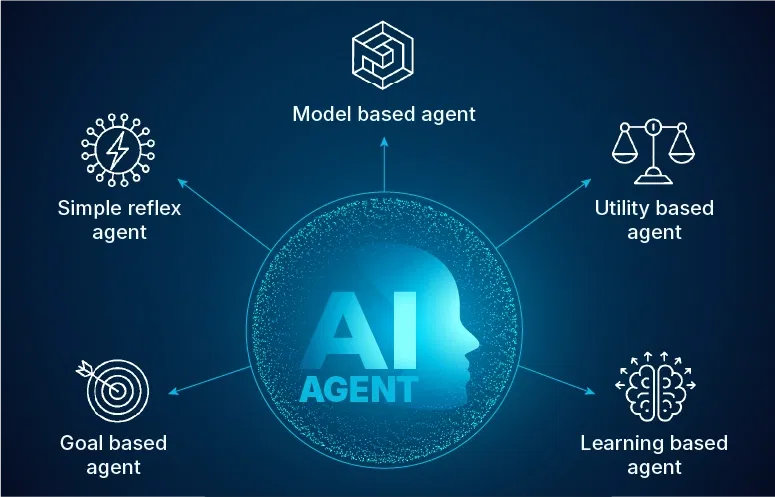
The integration of artificial intelligence into e-commerce is becoming one of the most important growth drivers for modern businesses. At the heart of this transition are custom AI Agents, i.e. digital entities that are “trained” on the data of an e-shop with the aim of automating processes, providing personalized service and enhancing overall operational efficiency. The training of such an Agent is not based on technical details or code from the business side, but on proper data organization, goal setting and careful preparation of the information to be used.
In the business environment, training a custom Agent can be described as the process by which e-shop data is “transformed” into knowledge that the Agent can utilize in real time. This data includes orders, products, descriptions, features, inventory, shipping and return policies, as well as support messages exchanged with customers. Through appropriate structure and organization, the Agent acquires the ability to respond, guide, inform and execute processes based on information that reflects real business data.
The aim of this article is to analyze at a purely operational level how a custom AI Agent is “trained” to function effectively within the e-shop. It presents the data mapping processes, content preparation practices, the ways in which the Agent is integrated into Magento, WooCommerce and ERP, the business flows it supports and the benefits created for each part of the business.
The concept of training an AI Agent
Training a custom AI Agent in an e-shop is described as the process through which the Agent gains access, understanding and operational utilization of the business's data. This process is not equivalent to developing a model or creating a new artificial intelligence system, but rather providing the appropriate information in a structured format so that the Agent can perform roles that previously required human support.
During training, the Agent learns to “understand”:
- the entire product catalog,
- the pricing rules,
- the change and return policies,
- shipment availability,
- the specificities of logistics,
- ERP processes,
- information related to after-sales,
- customer support flows,
- the content that has been developed in the e-shop.
In this way, the Agent functions as an extension of business knowledge, offering immediate support on issues that require access to real information. The Agent essentially becomes a “digital employee”, who has studied all the information that characterizes the operation of the business and responds to daily requests with stability and accuracy.
The importance of data quality
Data quality is a critical element in training a custom AI Agent. The data presented to the Agent reflects the true picture of the business. The clearer, more understandable and structured this information is, the more effectively the Agent will operate in the future.
The business is required to ensure that its basic information is clear, such as:
- clear product descriptions,
- correct prices,
- updated policies,
- accurate order management flows,
- clear warranty and return terms.
When the e-shop has large gaps in product information, unclear policies or outdated data, Agent training becomes difficult and the result is less efficient. On the contrary, organized information allows artificial intelligence to operate with immediacy and clarity, covering a multitude of everyday needs without human intervention.
Categorization and mapping of information
Before training an AI Agent, a clear mapping of the information to be used is required. This process is considered purely operational and does not include technical elements. The goal is to identify the information that constitutes the core of the e-shop's knowledge.
These include:
- the structure of the product catalog,
- the main categories and subcategories,
- the stock information,
- the differences between similar products,
- matching products with frequently asked customer questions,
- the processes related to orders, shipments, logistics,
- policies that often appear in support,
- the texts that describe the identity of the business.
The classification of these elements creates a solid foundation upon which the Agent can be trained. The mapping acts as a knowledge manual, which is converted into operational content for the Agent.
How e-shop data is used during training
The training of an AI Agent is based on real e-shop data, which provides the necessary information so that the Agent can respond to customer needs.
Order data
Orders contain important information, such as shipping method, fulfillment status, products purchased, and purchase frequency. Through this information, the Agent understands the progress of orders and can answer questions such as:
- «When will I receive it?»
- «"What is the status of the order?"»
- «"Has the product been shipped?"»
- «"Who is the carrier?"»
Product data
The Agent is “trained” in descriptions, features, differences between models and availability. In this way, he can help the customer in cases of:
- product comparison,
- needs identification,
- finding accessories,
- clarification of technical terms that concern buyers.
Shipping data
Shipping policies, schedules, shipping partnerships, and region restrictions are key elements used by the Agent.
ERP data
The ERP provides the final picture of inventory, product movements and order cycles. The Agent extracts this information in real time to provide timely updates.
Support data
The answers provided by the customer service department are a key element of training. They record the most frequently asked questions and the operational “voice” of the company.
How AI Agent is integrated into Magento and WooCommerce
Integrating a custom AI Agent into Magento or WooCommerce is done in a way that does not require changes to the e-shop architecture. The artificial intelligence works on top of existing data, without affecting the pricing, warehouse or content management processes.
The Agent leverages existing platform information to provide:
- order status update,
- product support,
- information about missions,
- promotional offers,
- cross-selling and upselling,
- after-sales guidance.
Magento and WooCommerce act as a real-time data source. The Agent accesses the platform's recycled content and leverages it through natural language for customer service.
Integration with the company's ERP
The ERP contains the specialized information related to order execution. During Agent training, special emphasis is placed on this data, as it is where the “truth” about the operation of the business lies.
Integrating Agent with ERP allows:
- stock update,
- information about delays,
- information on pending matters,
- information about shipment numbers,
- information about documents.
In this way, the Agent acts as a fully informed "representative" of the business, providing accurate data.
The operation of the Agent in practice
After training, the Agent actively participates in customer support and operational operations. Its use appears in multiple places:
Customer support
The Agent answers questions related to:
- orders,
- missions,
- returns,
- products,
- guarantees,
- charges,
- policies.
The answers are based exclusively on the company's data, with no room for arbitrary conclusions.
Product recommendations
The Agent recognizes the user's intent and recommends products that match their needs. This functionality is based on the product data that has "trained" the Agent.
After-sales guidance
Guidance in cases of changes, returns and warranty is provided consistently and stably to each user.
Internal support
The Agent can also be used by company personnel for quick access to information, as it functions as an internal knowledge base.
What does the business need for proper training preparation?
Preparing the business for training an AI Agent involves operational rather than technical steps.
Required:
- clear and up-to-date product information,
- clear policies,
- organized procedures,
- availability of order data,
- access to basic ERP data,
- coordination between e-commerce and support teams.
The business needs to ensure that the information it provides to the Agent is accurate and limited to what is absolutely necessary.
The training process from start to finish
The overall process of training an Agent can be described as a sequential operational flow:
Data collection and cleaning
Data is gathered from e-shops, ERP, products and policies. The information is organized in a way that allows the Agent to “study” it.
Definition of fields of use
The Agent is prepared to serve specific business scenarios such as after-sales, order management, product comparison or cross-selling.
Presentation of all business knowledge
The Agent studies the catalog, flows, descriptions, and policies to gain an overall picture.
Behavior control
After training, their ability to respond consistently and accurately is assessed. This process is completed with corrections and updates.
Productive operation
The Agent is integrated into the e-shop and supports customers and staff.
Business benefits
Training a custom Agent offers:
- direct support 24/7,
- load reduction for support,
- improving customer experience,
- more completed sales,
- reducing cart abandonment,
- consistency in communication,
- better use of data.
The value of education is directly reflected in the daily operation of the e-shop.
Conclusion
Training a custom AI Agent on an e-shop’s data is a crucial step in automating business operations. Through preparation, organized information, and smooth integration into Magento, WooCommerce, and ERP, the Agent becomes a fully informed digital partner. This process enhances the customer experience, reduces operational costs, and delivers consistent quality support.
The process of training a custom AI Agent and its integration into e-shops, ERP and service infrastructures can be entrusted to the specialized team. Fixit.gr, which has experience in developing e-commerce and artificial intelligence solutions. By contacting Fixit.gr, a complete business assessment, data organization and implementation of custom Agents that operate with precision and cover the daily needs of the business can be requested.