


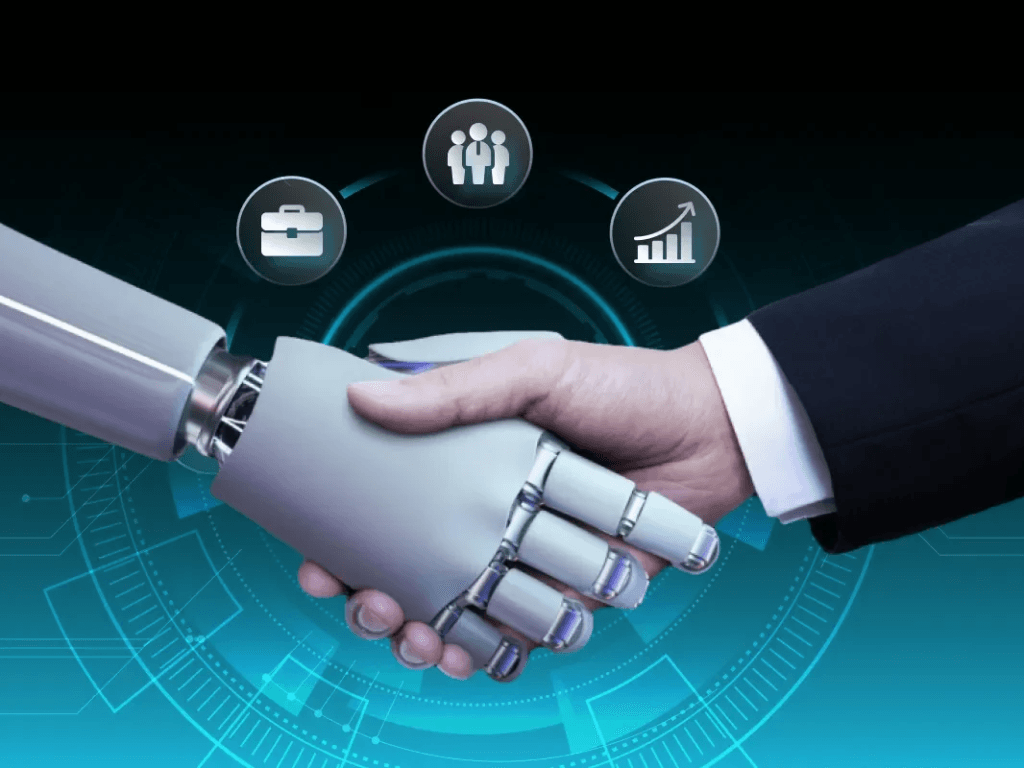
From the technology that powers smartphones to automated driving features in cars, the advancement of artificial intelligence in today's life is unmistakable.
As the new set of productive AI applications can perform a range of tasks, most businesses see it as the limit of their productivity.
The way businesses interact, create, and innovate has been transformed by Generative AI. According to recent research, adoption of artificial intelligence has more than doubled in the last five years. The use of generative AI is broad and widespread.
What is genetic artificial intelligence and why should it interest those running a business?.
What is Generative AI?;
Simply put, genetic AI is a type of artificial intelligence that is capable of generating a wide range of content, including text, audio, images, and synthetic data. Unlike traditional AI systems that rely on predefined rules, genetic AI uses complex neural networks to recognize patterns and structures in existing data sources and generate original results.
The recent buzz around AI creation is due to its simplicity in generating high-quality content in a fraction of a second. Although genetic AI technology has been around for a long time, it was in 2014 that generative adversarial networks (GANs) were introduced for authentic content creation. And by 2022, 35% of organizations had integrated genetic AI into their business models.
How can Generative AI help a business's operations?;
A recent report suggests that Generative AI could contribute to productivity gains in the economy equivalent to $2.6-4.4 trillion. This shows the bright future of generative AI for businesses. However, it is important for businesses to create unique content at the same time. It offers a broader set of applications that any business can use for its business activities.
How can genetic artificial intelligence help a business:
Automated customer support
Genetic AI can play a pivotal role in businesses’ approach to customer support automation. It can transform the way businesses interact with their customers and improve the overall customer experience.
One of the most notable advantages is the ability of AI production to create and deploy intelligent chatbots and virtual assistants that can interact with customers in real time. These AI-based systems can be used 24/7, which further ensures round-the-clock support and quick responses to all types of customer queries.
These AI-powered bots can also understand and interpret a wide range of customer questions, from simple FAQs to more complex issues. Based on the available data, they can resolve issues, offer immediate solutions, and even guide customers through step-by-step processes.
When these routine interactions are automated, businesses can significantly reduce response times, easing the burden on human customer support agents and freeing them to focus on more complex and sensitive customer concerns.
Furthermore, genetic AI continues to understand interactions and improve over time. Through natural language processing and machine learning, it becomes more adept at understanding context, refining responses, and adapting to the ever-changing needs of customers. Genetic AI’s ability to learn is certain to enhance the accuracy and effectiveness of automated responses, ultimately leading to higher levels of customer satisfaction.
Every customer interaction can be handled according to the company’s pre-defined policies and brand voice. It will ensure a consistent experience regardless of the time of day or the volume of inquiries. Besides, for any business, consistency strengthens the brand identity and builds trust among customers.
Along with this, genetic AI can also help in certain aspects of business management. For example, AI can analyze lead data and interactions to determine the likelihood of conversion.
By combining the effectiveness of artificial intelligence with human touch where needed, businesses can deliver a more efficient, responsive, and personalized customer support journey that ultimately leads to improved customer loyalty and retention.
Content Creation
Generative AI leverages sophisticated algorithms and machine learning capabilities to automate the production of a wide range of textual content. This works very well for content-intensive industries, including marketing, publishing, and e-commerce.
Generative AI accelerates content creation by producing articles, blog posts, and product descriptions at unprecedented speed. This far exceeds what human writers can achieve. What’s more, it can generate mass content in under a second, ensuring a steady supply of high-quality material for platforms with extensive content needs.
Additionally, it promotes diversity by effortlessly creating content on various topics and catering to different audience segments. Specifically, genetic AI can be improved to maintain a brand’s voice and style consistently across all content produced, reinforcing brand identity.
It can also create relevant and engaging content, such as personalized emails, blog posts, social media updates, and more. Content personalization is also possible. Genetic AI seamlessly integrates user data to create customized pieces of content.
Data Analysis Forecasting and Decision Making
Generative AI empowers organizations to extract useful insights from complex data sets to make strategic choices. One of its main advantages lies in the fact that it can identify patterns and trends in large volumes of data that can be difficult for human analysts to discern.
It uses advanced machine learning algorithms to analyze historical data and predict future outcomes with a degree of accuracy. This is especially valuable in industries where accurate forecasting is critical, such as finance, supply chain management, and marketing. Businesses can leverage these forecasts to optimize resource allocation, inventory management, and marketing campaigns, ultimately increasing their operational efficiency.
In addition, genetic AI provides a data base for decision-making. Generating predictions and insights equips business leaders with the information they need to make well-informed decisions that align with their long-term goals. This technology reduces reliance on intuition and subjective judgments, replacing them with evidence-based decisions that have a higher probability of success.
Additionally, genetic AI excels at scenario analysis, allowing businesses to simulate the potential impact of different decisions under various conditions. This «what if» analysis aids in risk assessment and strategic planning, providing a clearer understanding of potential outcomes and helping organizations prepare for different contingencies.
However, it is important to note that while genetic AI is a powerful tool, human expertise is vital in formulating questions, interpreting the information generated, and considering the broader context. Collaboration between AI-generated predictions and human intuition leads to more effective decision-making.
By augmenting human expertise with data-driven predictions, businesses can make more accurate predictions and strategic decisions that lead to success in an increasingly competitive landscape.
Design and Creativity
Generative AI introduces innovative capabilities that expand the horizons of artistic expression and design processes with the help of its computational capabilities. One of its key contributions lies in helping artists, designers, and creators in selecting ideas and executing them. It can generate a wealth of unique and imaginative ideas based on input parameters and act as a source of inspiration for new projects.
Additionally, genetic AI helps in creating complex and personalized designs. It can analyze huge data sets, identify trends and preferences, and translate this information into specially designed designs that resonate with a specific target audience. This level of customization improves and delights customers with products and graphics that are precisely aligned with their preferences.
Additionally, genetic AI fosters a collaborative environment between human designers and machines. Designers can incorporate AI-generated elements into their work, refining and evolving them to fit their vision. This synergy pushes the boundaries of creativity, leading to the creation of hybrid designs that combine human ingenuity with the algorithmic capabilities of AI.
The potential of Generative AI is particularly evident in fields such as architecture, fashion and graphic design. It enables the production of complex patterns, architectural designs and fashion concepts that push conventional boundaries. While AI can generate ideas and designs, human intervention is still necessary to curate, refine and select the best concepts for implementation, ensuring that the final result aligns with the brand identity and the creator’s intent.
Effortless Compliance
Genetic AI helps ensure that businesses meet compliance requirements in a streamlined and efficient manner. One of its key contributions lies in automating the creation of documents, reports, and materials that comply with specific regulatory frameworks.
Generative AI meticulously embeds the necessary data and information required for compliance into the content being generated. This reduces the risk of human error and ensures that documents consistently adhere to the intended formats and guidelines. As a result, businesses can navigate complex compliance landscapes with greater accuracy and reduced operational risk.
Additionally, genetic AI speeds up the compliance process by rapidly producing the required materials. This is especially valuable for industries dealing with complex and evolving regulations, such as finance and healthcare. It allows businesses to quickly adapt to changing compliance requirements, ensuring they stay up to date and avoid potential penalties.
Additionally, it supports internal consistency by creating materials that reflect a uniform approach to compliance across departments and functions. This consistency enhances collaboration, communication, and alignment within the organization, minimizing discrepancies and ensuring everyone is on the same page.
However, it is important to note that while genetic AI streamlines compliance efforts, human oversight remains essential. Compliance consultants and professionals play a vital role in defining the rules and parameters for AI-generated content to ensure it accurately reflects the nuances of regulations and business guidelines. It reduces errors, speeds up the compliance process, and enhances internal consistency, ultimately helping businesses address regulatory challenges more effectively and with greater confidence.
Codification
Generative AI can analyze existing code bases and generate new code snippets that are tailored to specific requirements. This can help developers speed up their work by providing suggestions, templates, or even entire code snippets that align with the project’s needs. These generated code snippets can be accurate, optimized, and follow best practices.
Also, by automating some aspects of code generation, genetic AI can improve development efficiency. Developers can focus on higher-level architecture and problem solving, while letting AI handle repetitive or routine coding tasks.
Additionally, AI-powered coders can minimize the chances of human error. The code generated is less likely to have syntax or logic errors, leading to a reduction in bugs and issues in the final product.
Additionally, AI can tailor its generated code to specific business needs, taking into account the context and requirements of the project. This customization can lead to more effective solutions. It can also help with code review and quality assurance. By analyzing code for potential issues, bugs, or vulnerabilities, AI tools can help developers identify problems early in the development process, saving time and resources.
Over time, genetic AI can learn from patterns in existing codebases and improve its ability to generate accurate and efficient code. This iterative learning process can lead to more advanced and sophisticated code generation.
Customization of products and services
Generative enables companies to tailor their offerings to the unique preferences and needs of individual customers using advanced algorithms and data analytics. One of its key strengths is that it analyzes vast amounts of customer data, including purchase history, behavior, and preferences, to create personalized recommendations.
AI-powered genetic adaptation improves the customer experience by providing choices that are precisely aligned with individual preferences. Whether in e-commerce, product design, or service offerings, businesses can create personalized solutions that resonate with customers on a personal level, increasing engagement and satisfaction.
Additionally, genetic AI enables real-time adaptation. By analyzing customer interactions and feedback, businesses can continuously improve and adapt their offerings to meet evolving customer preferences. This flexibility builds customer loyalty and maintains long-term relationships.
Generative AI also excels at helping businesses create unique variations of products and services. For example, it can create different versions of a product based on input criteria, allowing customers to choose from a range of customized options.
However, it is important to maintain the right balance between automation and human touch. While genetic AI generates recommendations, human intervention is crucial to ensure that the final customization aligns with customer expectations and brand identity.
Improved Automation of Human Resources Processes
Generative AI can help transform various HR tasks into efficient and error-free processes, freeing HR professionals to focus on strategic initiatives.
It can help automate routine tasks and time-consuming processes such as CV screening and candidate matching. Such systems can analyze CVs and applications and identify key qualifications and skills that match job requirements. This speeds up the hiring process by quickly selecting candidates who are best suited for the company’s roles. This allows HR teams to spend more time evaluating candidates.
Additionally, genetic AI facilitates the automation of internal communications within organizations. It can create employee onboarding documents, training materials, and announcements, ensuring consistent and accurate information is disseminated throughout the company.
Additionally, genetic AI enhances the effectiveness of performance appraisal processes. It can help analyze employee performance data and identify trends and patterns that may not be immediately apparent. This data-driven approach provides insights for HR professionals to make informed decisions about employee development and growth opportunities.
Additionally, genetic AI drives greater accuracy in HR functions. By automating tasks such as payroll processing and attendance tracking, it minimizes the chance of human error, ensuring that employees are paid correctly and administrative tasks are handled smoothly.
However, it is necessary to strike a balance between automation and human touch. While genetic artificial intelligence streamlines processes, human intervention remains critical for tasks involving empathy, decision-making, and interpersonal interactions.
Innovative Product Development
Generative AI is truly a game-changer that can significantly improve businesses’ innovative product development processes. It can help redefine the boundaries of creativity and provide new avenues for ideas and design that no one had thought of before. Generating ideas can seem less challenging when businesses can get help in conceiving innovative concepts, products, and services.
Based on market trends, customer preferences, and existing product data, genetic AI can generate a wealth of innovative ideas. By accelerating the early stages of product development, AI can spark inspiration and push companies to explore unique possibilities.
Additionally, genetic AI helps with rapid prototyping. It can generate 3D models, visual concepts, and even virtual prototypes based on input criteria. This can facilitate visualization and allow businesses to iterate patterns quickly, reducing time and cost.
Additionally, Generative AI supports iterative design processes. It can provide multiple design variations based on specific parameters, allowing designers to experiment with different options and explore alternative design solutions before finalizing an idea.
Generative AI also encourages interdisciplinary collaboration. It can help designers, engineers, and other teams create innovative products by offering input from multiple perspectives and creating designs that meet multiple requirements.
However, it is important to note that while genetic AI enhances innovation, human expertise remains vital. Human designers and engineers bring artistic sensibilities, domain knowledge, and critical thinking that ensure that the ideas generated by AI align with brand identity, user needs, and technical feasibility.
Epilogue
Integrating genetic AI into business operations has the potential to usher in a new era of efficiency, creativity, and strategic decision-making. With its ability to automate tasks, personalize experiences, and create innovative solutions, genetic AI can reshape the way your organization operates and interacts with customers.
However, as with any transformative technology, it is imperative that its adoption is done carefully. Balancing the benefits with ethical considerations, data security, and maintaining human oversight is key to harnessing the full potential of genetic AI while maintaining the quality and integrity of business processes.
By strategically planning and adapting this technology to a business's unique needs, the power of productive artificial intelligence can be applied to drive growth, improve customer satisfaction, and stay ahead of the curve in a dynamic and competitive landscape.
In Fixit.gr, one can get guidelines for the proper use and implementation of Generative AI. Experienced developers can create a personalized framework for the use of AI in businesses, with the aim of increasing their conversion rate.