

Customer Journey Optimization is a critical function for the performance of every e-commerce store in 2025–2026. The concept of a journey is no longer limited to a simple series of steps from visit to purchase, but describes a dynamic and constantly evolving set of experiences, interactions and touchpoints. With the integration of artificial intelligence systems, this journey is not just monitored; it is analyzed, understood and changed in a way that adapts to the needs of each visitor.
Customer Journey Optimization (CJO) with AI aims to identify real intent, improve the navigation experience, reduce friction in the path to purchase and create more relevant touchpoints at all stages of the customer lifecycle. AI acts as a mechanism to monitor, predict and adapt the customer journey, allowing the e-shop to function as a living system that constantly learns and evolves.
What follows is a complete analysis of all the key principles that determine the application of AI in customer journey optimization, with an emphasis on function, data, implementation techniques and the resulting business value.

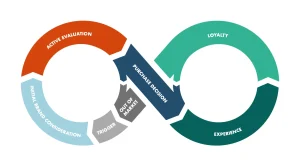
The Concept of the Customer Journey in Modern Online Stores
The customer journey describes the set of experiences a user has from the moment they become aware of a product or business to the moment they complete a purchase and become a repeat customer. The customer journey is not linear; instead, it is characterized by multiple touchpoints, retracements, and continuous behavioral change.
In the digital environment, the path includes:
- product searches,
- page views,
- interactions on mobile or desktop,
- breaks and returns to navigation,
- subscription to newsletters or reward programs,
- product comparison and feature review,
- entering or exiting the checkout,
- post-purchase experiences such as support, returns or order tracking.
The complexity of the route necessitates an approach that goes beyond traditional static methods. AI systems detect patterns that are not visible through simple observation and adjust the route without manual intervention.
The Role of Artificial Intelligence in Route Optimization
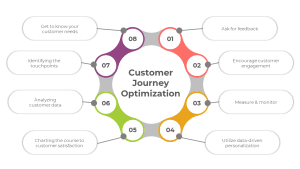

Artificial intelligence is responsible for analyzing the behavior of each visitor, assessing purchase intent, predicting potential obstacles, and deciding how the path should be adjusted to maximize the likelihood of completing a transaction.
AI is not limited to data collection; it goes one step further:
- combines hundreds of data points from different user actions,
- evaluates the quality of the experience in real time,
- detects micro-moments that indicate intention, confusion or abandonment,
- automates the provision of appropriate information,
- customizes content, layout, product recommendations and messaging,
- creates a unique path for each user.
In this way, the route is no longer predetermined. It is dynamically determined and changed to serve the needs of the specific visitor at the specific moment.
Types of Data that AI Leverages for the Customer Journey
Artificial intelligence is based on a wealth of data that is directly linked to user behavior. In the context of route optimization, the most critical data includes:
- browsing history,
- the time spent on specific pages,
- movement patterns between categories,
- the points where the user hesitates or gives up,
- the use of filters and search tools,
- interactions with comparison tools,
- responding to commercial messages,
- the contents of the basket,
- the previous stages of purchase in other sessions,
- the frequency of returns to the same or similar product.
AI aggregates, cleans, and analyzes this data, creating a dynamic user profile that enables further predictions. This profile is constantly updated as the user continues to interact with the e-shop.
AI Models Used in Route Optimization


The operation of AI in the customer journey is based on different types of models, which work together to create a complete picture of the user.
Predictive models are used to estimate the next possible step, based on historical patterns. Intent detection models evaluate distinct actions and behaviors related to interest in a specific category or product. Recommendation models suggest products that are related to the content the user is viewing. Decision models determine the appropriate action to take at each point in the journey.
NLP models also play an important role, analyzing users' search queries or messages they send to support systems. In this way, needs or difficulties that do not arise from navigation data are identified.
How the Customer Journey is Shaped in an AI Environment
The customer journey is no longer a static diagram. With the use of artificial intelligence, the journey is transformed into a flow that is constantly adapting.
For example, when a visitor shows high interest in a category but has not yet progressed to products, AI can enrich the category with content that is directly related to their needs. In the event that a user returns to the site after a short period, the content of the landing page can be adjusted to display products related to previous searches.
At checkout, AI can assess when there is a possibility of abandonment and reorganize the steps, reducing the total number or suggesting faster payment options.
The Role of AI Agents in Customer Journey Optimization
AI Agents have begun to function as an intermediate layer between the user and e-commerce systems. Their role is not limited to providing answers, but extends to interconnecting microservices, understanding context, and dynamically adapting the path.
Agents continuously analyze behavior and redesign micro-moments of navigation. Depending on the intent, they can trigger product recommendations, simplify processes, display helpful content, support the user with information regarding warranties or shipments, and even intervene at sensitive points where hesitation is observed.
Touchpoints Affected by AI
AI impacts the entire journey, from first contact to post-purchase support.
When the user logs in, general characteristics of interest are recognized. When browsing categories, product classifications and presentations are adjusted. Highly relevant information is displayed at the product selection stage. During the purchase process, potential hesitation is assessed and barrier reduction methods are activated. After the purchase, AI allows for the provision of personalized updates, suggestions and support.
Customer Journey AI Implementation Techniques in E-shops
AI implementation techniques for route optimization are based on a combination of tools that process and interconnect data.
Middleware layers are used to connect the e-commerce platform, headless systems, CRM and CDP, while AI models communicate via APIs that return customized content. Headless architectures allow changes to be applied immediately to the frontend, without affecting the backend logic. Continuous training of the models ensures that predictions and actions remain relevant.
Business Benefits of AI Route Optimization
Optimizing the customer journey brings significant benefits on multiple levels.
Increasing the likelihood of completing purchases is one of the most obvious results. The ability to provide personal guidance leads to increased conversion rates, while the experience becomes more comfortable and targeted. Reducing friction points results in fewer cart abandonments, while presenting relevant content increases order value.
Additionally, AI improves the efficiency of internal operations by reducing the need for manual management of recommendations and classifications. The business gains a better understanding of its audience and can make decisions based on real data, not assumptions.
Conclusions
Optimizing the customer journey with artificial intelligence is one of the most important pillars of modern e-commerce. Through behavioral analysis, intent targeting, and real-time content customization, AI has transformed the shopping experience into a dynamic and personalized process that evolves with each interaction. E-shops that make the most of these capabilities gain a significant advantage, both in terms of sales and customer experience and loyalty.
To implement artificial intelligence systems that optimize the customer journey in online stores, support can be sought from specialized teams that know the technical details, data requirements, and how AI models are integrated into e-commerce architectures.
Her team Fixit.gr has experience in implementing personalization mechanisms, behavioral analysis and customer journey automation, offering comprehensive solutions that meet the needs of every modern e-commerce business.