


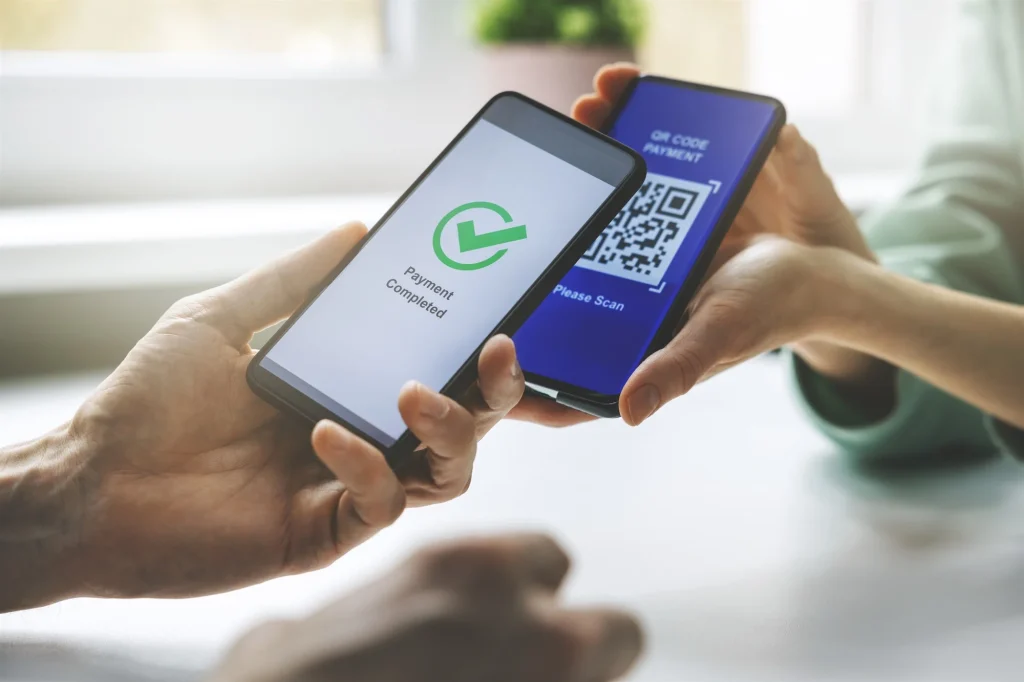
The IRIS direct payment service is now considered a key development in the Greek digital economy, with applications in a wide range of business activities. As of November 1, 2025, accepting payments via IRIS becomes mandatory for businesses and self-employed individuals, in physical retail locations as well as in online stores. This change is part of a broader digital strategy that seeks to accelerate transactions, increase transparency, reduce the use of cash and gradually unify tax information in real time.
This institutional transition creates significant impacts on enterprise resource planning (ERP) information systems and electronic invoicing, requiring technical, organizational and accounting adjustments. At the same time, changes to business flows, regulatory obligations and collection reconciliation mechanisms are expected.
Historical development and institutional framework
IRIS was established by the Greek interbank system as an account-to-account payment service. Gradually, the service was expanded from private payments to business and e-commerce payments. Institutional decisions 2023-2025 established mandatory acceptance of the service by entities issuing retail receipts or service invoices.
The deadline for linking business bank accounts to the IRIS system has been set at 1 November 2025. After this date, failure to accept payments via IRIS may result in administrative penalties.
This development is in line with European guidelines to enhance instant payments, with the aim of reducing costs and settlement time.
Functional description of the IRIS system
IRIS provides a direct credit payment system, without the intermediary of a card. The charge is transferred directly from a customer account to a professional account. The functionality is divided into three categories:
P2P (Person-to-Person)
Payments between individuals, often via mobile applications.
P2B (Person-to-Business)
Payments to businesses, usually via QR code or mobile banking app.
E-Commerce
Payments in online stores via dynamic QR or special options in the shopping cart.
Payments are considered immediate, with automated clearing in the banking system and entry in the business IBAN.
Impact on electronic invoicing
Automated payment identification
By posting the transaction immediately, the issuance of an invoice or receipt may be completed almost simultaneously with the payment. Electronic invoicing is affected as follows:
- Issue timestamps are adjusted to match the payment confirmation.
- Automated revenue streams are enabled via API.
- The need to control overdue receivables is reduced.
Interconnection with tax information systems
With the increase in IRIS usage, revenues are reflected with greater transparency:
- The electronic revenue book is updated faster.
- Payment data is consolidated with billing information.
- The reconciliation of bank transactions becomes more systematic.
Improving controls and recording
Electronic invoicing is enhanced by the fact that payments are made digitally without the use of cash, which limits the handling of physical money.
Impact on ERP systems
The introduction of IRIS changes ERP functions. The following subsystems are affected:
Collections subsystem
ERP providers require:
- Automatic recognition system for paid documents.
- Real-time customer account updates.
- Suitable reports for transaction reconciliation.
Direct collection requires precise classification of payments based on the QR code.
Financial flows
Banks send transaction data that needs to be imported or synchronized with ERP. Automatic reconciliation reduces accounting costs and human errors.
E-commerce management
In combination with e-shops:
- Checkout processes are being updated.
- Receipts are issued after payment confirmation.
- Cancellations due to failed cards are reduced.
Technical application requirements
POS terminals
Physical stores require POS compatible with:
- IRIS P2B function,
- dynamic QR generation,
- payment reference recording.
Older generation POS may require firmware.
Internet portals
Online stores require:
- Payment provider API connection,
- callback endpoints for information from the bank,
- order matching mechanism with IRIS reference.
Bank account
An active business account linked to company details is required. Linking is required for timely compliance.
Organizational adjustments
The introduction of IRIS requires a restructuring of internal processes.
Staff training
Store staff should be familiar with:
- reading QR codes,
- payment confirmation on POS screens,
- exception logging.
Customer information
Businesses are required to display an IRIS acceptance sign. It is recommended to place it:
- marking stickers,
- informative checkout plans.
Returns management
Refunds via IRIS are made via reverse bank transfer. Therefore:
- Credit notes are registered,
- The disbursement of funds and order cancellation are coordinated in an accounting manner.
Payment agreement and accounting entries
Using IRIS creates more distinct financial identifiers:
- Agreement can be made automatically with a reference code.
- The speed of book updates is increasing.
- Accounting balances are decreasing.
ERPs with reconciliation capabilities benefit from automation.
Advantages
Speed
Transactions are processed in seconds, without a card clearing process. This leads to:
- increase in liquidity flow,
- acceleration of product deliveries,
- reduction of customer debt risk.
Reliability
Payments are based on a banking environment, offering stability. At the same time, they minimize:
- cancellations due to insufficient card balance,
- card fraud.
Cost reduction
Card fees can be replaced by lower fees. The overall transaction costs are also reduced for small businesses.
Transparency
Recording payments enhances tax compliance and minimizes:
- unrecorded receipts,
- accounting inconsistencies.
Disadvantages and challenges
Technical readiness
Some businesses may not have:
- modern POS,
- ERP modules,
- personnel with relevant training.
Cost of adaptation
Required:
- upgrades,
- infrastructure market,
- contracts with branding providers.
Exception management
In case of technical malfunction:
- manual receipts are issued,
- a post-transaction confirmation is required.
The opt-out mechanism must be documented.
Impact on the e-commerce market
The IRIS login at the online store checkout:
- reduces card usage,
- accelerates order execution,
- enhances security.
The user experience becomes simpler because the mobile banking application is used without entering card details.
At the same time:
- payment cancellations are becoming rarer,
- stocks are updated faster,
- Returned products are recorded immediately.
Impact on the banking sector
The use of IRIS:
- reduces the burden of card clearing,
- creates an increased need for cybersecurity,
- reinforces the importance of APIs.
Instant transaction network traffic increases processing power requirements.
Conclusion
November 1, 2025 is a milestone for the digital transformation of businesses in Greece. The mandatory acceptance of IRIS is directly linked to the automation of collection management, electronic invoicing and interoperability with ERP systems. Although the adaptation requires technical investments and organizational changes, the benefits in speed, transparency, cost savings and streamlining of flows are expected to contribute to the overall upgrade of business operations.
Successful implementation depends on timely preparation, staff training and infrastructure adaptation. In the medium term, IRIS is expected to become a central mechanism in the Greek direct payments economy and will significantly enhance digital invoicing and business resource management flows.