

All other comparisons pale in comparison to this one. Right now, the two platforms are vying for the lion's share of large enterprises, so comparison is inevitable. By weighing the pros and cons of each platform and comparing their strengths, the stronger of the two will emerge. The Magento and Shopify are currently two leading e-commerce platforms in their category, chosen by thousands of businesses. Regardless of the shortcomings, both platforms offer the superior features in an online store.
Prices and costs.
Για την επιλογή μιας εκ των δύο, κύριος παράγοντας είναι το κόστος. Οι δύο πλατφόρμες συγκαταλέγονται στις “ακριβές” λύσεις. Η Magento, μπορεί να προσφέρει λειτουργίες ανάπτυξης μιας επιχείρησης που όσο επεκτείνονται, αυξάνεται και το κόστος. Έτσι, είναι σύνηθες οι σελίδες που κατασκευάζονται με Magento, να είναι αρκετά κοστοβόρες. Αυτό διότι, προσφέρει απεριόριστες επιλογές σε modules, που αναδεικνύουν το online κατάστημα και το εξελίσσουν.
Περισσότερες πληροφορίες για τα modules της Magento μπορούν να βρεθούν σε προηγούμενο άρθρο “How important are Magento Modules?;“.
Shopify, on the other hand, is structured a little differently. Its cost is based on a subscription basis, which includes both the domain and the hosting of an e-commerce site. Shopify's monthly plans are pre-defined, but there are also hidden charges as you have to calculate the themes and applications that will be used.

Magento Vs Shopify. The biggest battle in ecommerce store building.
In conclusion, there is no discernible difference between the two platforms in terms of cost. They are different systems in this area. Magento is an open source platform, so pricing will depend entirely on the needs of the business. Shopify on the other hand has three fixed-price plans that appear to be less expensive on the surface, but additional themes and apps will need to be purchased.
Ease of installation and use.
The majority of e-commerce businesses that build an online business are not web designers or programmers. Even users who are familiar with the basics want a platform that is easy to set up and operate.
In terms of usability, Magento is not as user-friendly as Shopify, especially for those who are not generally tech-savvy. While this platform gives users complete control over their website, it requires comprehensive knowledge of the platform to set up and configure their online business.
On the contrary, Shopify holds a clear advantage over Magento. Thanks to its hosted nature, it is quite easy to use. Moreover, Shopify is made for everyone, both technical and non-technical people. As a result, Shopify users do not have much trouble setting up their stores.
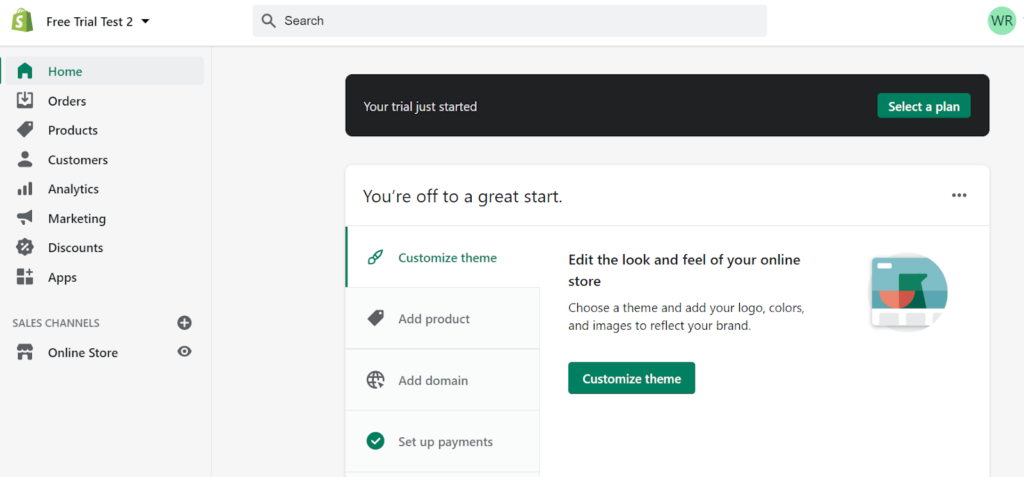

In terms of ease of use, Shopify holds the lead.
In reality, when it comes to large businesses, the founder or owner will rarely be involved in managing the e-commerce site. In smaller-scale stores, ease of use plays a role. In the business sector, however, it is always good to have a professional intervene, regardless of how easy or not a platform is.
Features and functions.
These two popular platforms offer fundamental features for starting and maintaining an e-commerce business.
Here are some examples:
- When it comes to discount and coupon codes, Magento allows you to create as many codes as you need. While Shopify also offers this feature, it is not included in the basic plan.
- For inventory management, Magento users can control an unlimited number of items and products. The same is available for Shopify stores except for those using the basic plan which only allows 25 items.
- When it comes to shipping, both platforms offer flexible shipping methods and automate the calculation of shipping costs.
- In the multi-language setup, as many languages as desired can be added to Magento stores. For Shopify on the other hand, some language implementations need to be sought.
- Another common feature of ecommerce stores is blogging, which is available on Shopify and can be added to Magento using a free or paid extension.
- The last key features provided by both platforms are related to SEO & marketing. In fact, Magento and Shopify provide similar SEO features like editing meta-tags, meta titles, keywords, URL keys, alt text, etc., which help in improving the ranking of websites in SERP.
Although marginal, the use of Magento As a platform for starting and growing an e-commerce business, it excels in terms of functionality. The possibilities it provides are almost limitless without any particular limitations.
Design and customization.
Website design is one of the most critical things that determine the success of a store. There are many Magento and Shopify themes to choose from, both free and paid. Generally, most of the templates are mobile-friendly, which will present seamlessly, regardless of the devices that customers are using.
There is no other intervention that can be done other than changing the basic colors and font in Shopify themes. On the other hand, Magento is a flexible and extensible platform, which allows you to customize and create a visually excellent and unique design based on creativity.
In terms of code, Magento is open source while Shopify is proprietary. So, being open source, Magento allows for the code to be freely customized to suit any need, while Shopify’s code is impossible to modify. As a result, Shopify is only suitable for small businesses that host simple websites with a common look and feel. On the contrary, Magento can meet the needs of medium and large e-commerce businesses that often require unique and complex stores.


Magento gains a clear lead in design and customization.
Magento clearly dominates when it comes to customizing and designing a store. It offers unlimited customization options with minimal restrictions, allowing you to create a unique online store that is complex and different in appearance and aesthetics.
Performance and response speed.
The most important thing is the response speed of an e-commerce website. This ensures user experience and customer retention to a huge extent. Many studies have shown that even a delay of 0.5 seconds can lead to a decrease in conversion rate by 8%.
Since Shopify is a hosted solution, its website performance is guaranteed by the company. Shopify websites in most cases have stable performance. For websites built with Magento, the speed of the website depends largely on the hosting services chosen. If a powerful host with proper website optimization is chosen, the performance and speed is significantly improved compared to Shopify.
As above, in this area, Shopify provides the basics. Regardless of whether you want to increase performance or choose website hosting. Magento, on the other hand, gives you the option of acquiring more efficient hosting and, by extension, increasing the speed of your website.
Modules and Plugins.
Magento and Shopify already provide almost everything you need to get online. However, it is highly recommended to consider using some third-party extensions to enhance the performance and functionality of your website. As of now, Shopify offers over 2,000 apps in its store, which is less than the current number of Magento extensions in the market (over 5,000).
Comparatively, Magento not only provides more add-ons in quantity but also in quality. Its list of extensions covers all aspects of store enhancements, from accounting and finance, marketing, content and customization, customer support, payments and security, reporting and analytics, etc.
Clearly, in this hand-to-hand battle, Magento prevails. More options and optimal functionality in extensions. This automatically means an increase in the operating efficiency of the online store.
User experience.
One of the most important aspects when evaluating the quality of an e-commerce platform is the user experience, especially the ease of checkout. Magento provides an easy and fast two-step checkout process with many great features, such as guest checkout and one-click account creation. There is also a discount code box placed directly on the checkout page. Shopify also offers a convenient one-page checkout. One major issue is that the basic Shopify plan does not display real-time shipping prices out of the box, which can lead to a higher cart abandonment rate at checkout.
Shopify supports over 100 different payment gateways. These include popular names like PayPal, Stripe, Amazon Pay, and Apple Pay. Magento supports over 150 payment gateways, but the majority of them are aimed at large businesses, such as WorldPay. It also allows you to sell directly through Amazon and leverage your Magento-based business’s inventory. This is great, allowing you to reach customers through Amazon’s global platform.
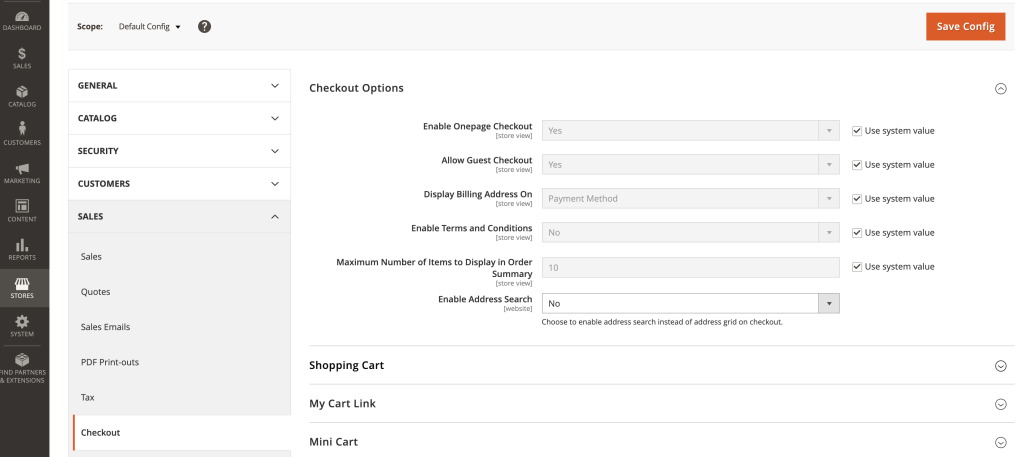

Stronger in payment methods and user experience, Magento.
The dominance in the user experience sector was almost a given for Magento, if one considers the features offered by the platform. So, the ease of checkout, for example, offers many options and users will visit the business frequently for purchases.
E-store scalability.
From the above, it is easy to see which platform will prevail in this area as well. There is no doubt that Magento is better than Shopify for medium to large scale e-commerce stores with thousands of products. If it is about creating a small website without a long-term commitment, Shopify can be a good choice. But, if it is required to create an online business that is likely to grow and evolve dynamically in the future, Magento comes first by far.
Magento is one of the most powerful, scalable and customizable platforms. It was developed to suit businesses of all sizes and models, selling almost any type of product or service. It is a complete e-commerce solution that provides merchants with an amazing number of top-notch features. In addition, the open source structure allows for virtually any customization and gives the ability to choose where to host the website.
The clear winner in all areas (perhaps Shopify prevails in ease of use) is the Magento platform. Its advantages are countless, while the adaptability is fully personalized.