

The 7 facts about website traffic.
In the ever-evolving digital landscape, web traffic is at the heart of online success. Whether it’s an e-commerce store, a content-driven website, or a personal blog, understanding the ins and outs of web traffic is crucial to achieving your goals. Beyond simple numbers and statistics, web traffic includes a set of elements that shape its composition and influence its impact.
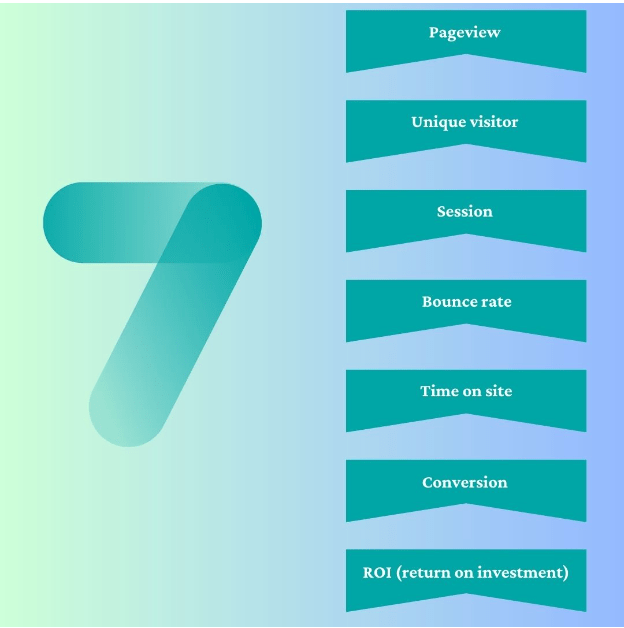
In this article, we will unravel the seven key elements that lie at the core of web traffic. By understanding these elements, you will gain valuable insights and the tools you need to optimize your website, boost engagement, and drive meaningful conversions.

Pageview.
Page views, which serve as a widespread metric, are widely used to measure the size of website traffic. Every time a user views a particular page on a website, it is automatically recorded as a page view, which solidifies its importance. It is vital to keep in mind that, during a single visit to a website, a single user can generate multiple page views.
Using page views wisely as a metric allows website owners and marketers to gain a deep understanding of their website’s overall popularity and engagement levels, extending to individual pages. By meticulously tracking the cumulative count of page views received, invaluable information emerges, allowing them to identify the most sought-after and engaging pages, while also identifying areas that need improvement.
Unique visitor.
Unlike the pageview mechanism, which records every pageview, unique visitors are only recorded once per individual visitor within the specified time frame, regardless of the frequency of their visits.
Measuring unique visitors provides valuable information about the size of a website's audience. By diligently tracking unique visitor counts, website owners can determine the reach of their website and evaluate the effectiveness of their marketing campaigns in attracting new visitors.
However, it is crucial to recognize the limitations inherent in the accuracy of unique visitor tracking. For example, there may be cases where multiple users access a website from the same device or network, resulting in a unique visitor being counted. In addition, users who clear their cookies or switch devices may be counted as new unique visitors, even if they have visited the website in the past. These factors highlight the need for a differentiated interpretation of unique visitor data and awareness of the potential discrepancies that may arise during the tracking process.
Related articles: WordPress & WooCommerce security vulnerability.
Session.
In the field of website traffic, the concept of a session is emerging as a crucial element, representing a period during which a user is actively engaged with a website. A session begins when the user visits the website and ends after a certain period of inactivity, usually 30 minutes or more, or when the user decides to close their browser.
During a session, users have the freedom to take multiple actions within the website. These actions may include navigating to different pages, making purchases, or filling out online forms. In particular, regardless of the number of pages visited or the nature of the actions taken, each session is considered a unique unit of engagement.
Sessions serve as invaluable metrics that offer insights into user behavior and engagement. By meticulously tracking the number of sessions a website receives, owners can determine how often users return to their platform and assess their level of engagement with the content provided.
Additionally, sessions can be used in conjunction with other metrics, such as bounce rate and time on page, to create a comprehensive understanding of how users interact with the site. This multi-faceted approach enhances the ability to gain deep insights into user behavior and preferences, facilitating strategic decision-making and optimization efforts.
Bounce rate.
In the realm of website traffic analysis, bounce rate plays a crucial role as a metric used to measure the percentage of visitors who leave a website after viewing just one page, without further interaction or exploring additional pages. Essentially, bounce occurs when a user lands on a page within the website, but immediately exits without engaging with links or interacting with other content.
The bounce rate calculation involves dividing the number of page views, where the user views only one page, by the total number of visits to the site. For example, if a website records 1,000 visits in a day and of those visits, 300 result in bounces, the bounce rate for that day would be calculated as 300 divided by 1,000, resulting in a rate of 30%.
A high bounce rate can mean that the website is not engaging users effectively or that visitors are not able to find the desired information on the website. However, it is important to note that the definition of a high bounce rate is not until it reaches 47%, as evidenced by a specific bounce rate statistic published by a recent study.
Understanding and analyzing bounce rate enables website owners to identify potential areas for improvement in user engagement and website design. By delving into the reasons behind a high bounce rate, adjustments can be made to enhance the site's appeal and increase user retention, thereby promoting a more positive and fruitful user experience.
Time on site.
The time spent on site component plays an important role in measuring the average length of time visitors spend on a website. This metric is typically calculated by subtracting the time of the first interaction, such as page load time, from the time of the last interaction, such as clicking a link to a different page, for each visit. This then results in the average duration of all visit durations.
A longer time on site generally indicates that users are highly engaged with the site, finding value in its content and features. Conversely, a shorter time on site may indicate that users are either unable to locate the information they are looking for or that the site is failing to effectively capture their interest.
By carefully analyzing the time spent on site metric, website owners can discern which pages and content resonate most with users. This invaluable insight allows for strategic adjustments to be made to improve the overall user experience and increase engagement. For example, website owners can consider improving the design or navigation of specific pages to facilitate a smoother user journey. Additionally, adding relevant and valuable content to the website can help users stay engaged for longer, thus fostering a stronger connection with their target audience.
Related articles: Magento Google Analytics G4 – Google Tag Manager (GTM)
Conversions.


Conversions involve specific actions taken by website visitors that align with the website's predetermined goals. These goals can vary depending on the nature and purpose of the website, encompassing a range of desired actions such as purchases, form submissions, newsletter signups, or other targeted goals.
For example, in the context of an online store, a conversion occurs when a visitor successfully completes a purchase transaction. Conversely, for a service-based business that relies on creating initiatives, a conversion may occur when a visitor submits a contact form or expresses interest in scheduling a consultation.
Conversion tracking is becoming increasingly important as a means of measuring website performance. It provides invaluable insights into visitor interaction patterns, offering a comprehensive understanding of whether the website is effectively achieving its intended goals. By meticulously analyzing conversion rates, website owners can make informed, data-driven decisions to optimize the user experience, thereby increasing the likelihood that visitors will take the desired actions.
This knowledge paves the way for strategic improvements to design, content, and the overall user journey on the website, ultimately boosting conversion rates and maximizing the website's effectiveness in achieving its key goals.
ROI (Return on Investment).
Return on investment (ROI) is a performance measure used to evaluate the profitability of an investment in relation to the associated costs. In the field of website traffic, ROI takes on particular importance, representing the financial return on investment resulting from marketing efforts aimed at driving traffic to a website.
Calculating ROI involves comparing the revenue generated from website traffic to the cost of the marketing efforts used to attract that traffic. For example, consider a scenario where a website invests $10,000 in a pay-per-click (PPC) advertising campaign and then generates $20,000 in revenue from the resulting influx of website traffic. In this case, the return on investment would be calculated as 100%, meaning a return of 1 $ for every 1 $ invested.
ROI analysis provides website owners and marketers with a comprehensive understanding of the effectiveness and efficiency of the marketing strategies they implement to drive website traffic. By thoroughly examining ROI, strategic decisions can be made to optimize marketing campaigns, allocate resources more effectively, and boost overall profitability. This data-driven approach enables stakeholders to maximize their return on investment, ensuring a sustainable and thriving online presence.
Epilogue.
This investigation revealed the seven key elements of website traffic, providing valuable insights and metrics for website owners and marketers. These elements—ROI, page views, conversions, time on site, bounce rate, sessions, and unique visitors—contribute to a comprehensive understanding of website performance and user engagement.
So by analyzing these seven elements of website traffic, website owners and marketers can make data-driven decisions, optimize user experience, and ultimately achieve their goals for increased engagement, conversions, and overall success in the digital landscape.
In the fixit.gr, a website’s metrics can be fully understood and analyzed with the help of experienced developers. They have the expertise to delve into the specifics of website traffic metrics such as ROI, page views, conversions, time spent on site, bounce rate, sessions, and unique visitors. By leveraging their skills, they can effectively optimize the website or e-commerce store, ensuring that it successfully achieves its intended goals.