Post-purchase service is a critical stage in the overall customer experience. In e-commerce, after-sales covers every process following the completion of an order: shipping updates, answering inquiries, managing returns, tracking warranties, and resolving issues related to product usage. At the same time, this specific stage is considered decisive for customer retention and the creation of cross-selling opportunities, as buyers who receive high-quality support return more frequently and show a greater willingness for additional purchases.
In this environment, AI Agents are increasingly being adopted as a mechanism for automating after-sales processes. Their operation allows the business to provide immediate, consistent, and personalized information without requiring a vertical increase in human resources. At the same time, through automation, opportunities are created for the smooth and non-intrusive promotion of complementary products, based on actual needs rather than generic commercial messages.
The objective of this guide is to present, in an operational manner, the role of AI Agents in after-sales support and cross-selling, explaining how they function, the processes they integrate into, and the benefits generated for both customers and businesses.
The Role of AI Agents in the After-Sales Environment
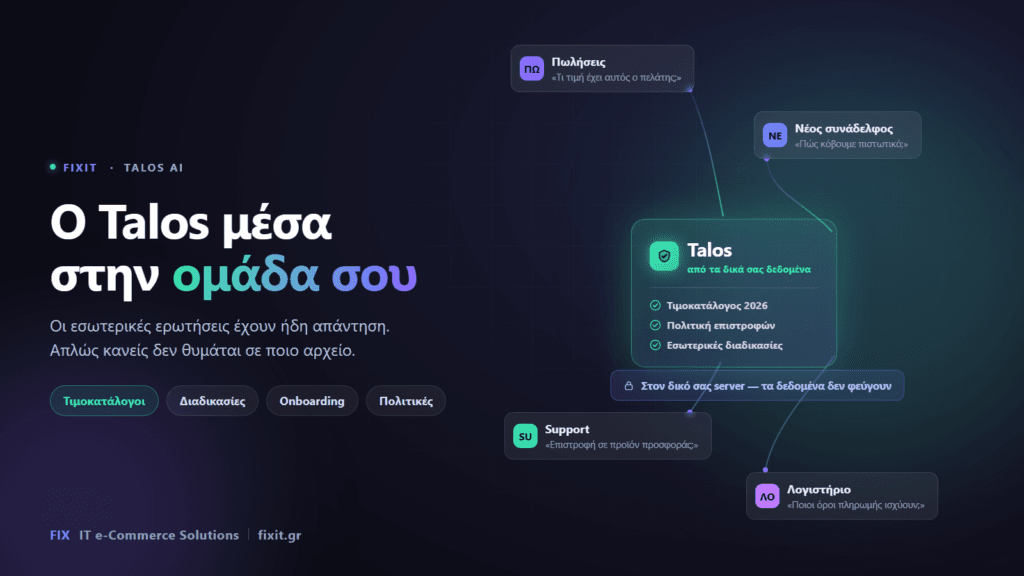
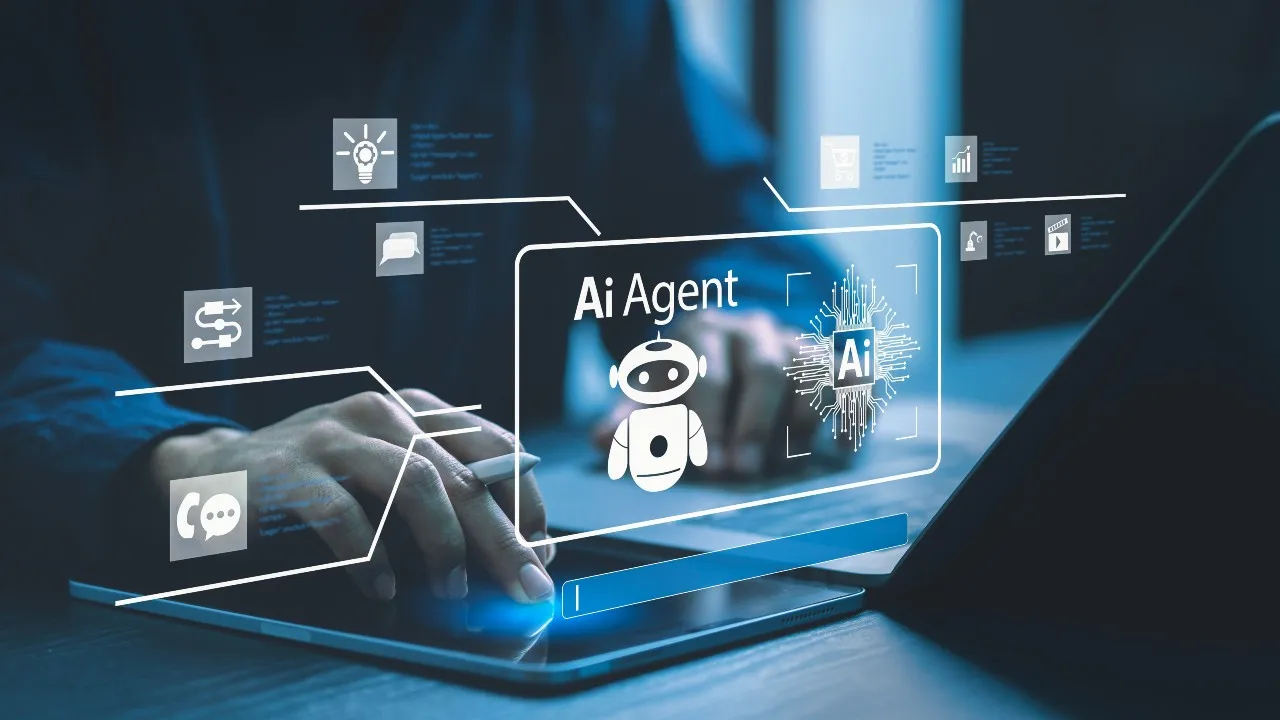
AI Agents function as digital assistants that take over customer communication after the purchase. Their operation is based on accessing real-time information from the business's systems, such as the ERP, the e-shop, and the shipping system. In this way, the Agents provide updates based on actual data, without delay and without the involvement of a human representative.
The position of AI Agents in after-sales includes:
- updates on shipping progress,
- communication regarding delays, restocking, or schedule changes,
- provision of instructions for package pickup,
- guidance on exchange or return procedures,
- information on product warranty and support,
- ability to answer common post-delivery inquiries.
The AI Agent is integrated into the existing support environment and functions as a constantly available point of contact. The customer reaches out via a chatbot, which is typically located on the e-shop, a messaging app, or a social media channel.
The immediacy of the response plays a decisive role in the customer's perception of service quality. In the traditional model, the support team often experiences delays due to workload, resulting in customer dissatisfaction. With the use of AI Agents, information is provided immediately upon the submission of the inquiry.
Customer Updates After Product Shipment
After the order is completed, the customer often has questions regarding delivery time and the progress of their package. AI Agents take over continuous real-time updates without requiring human intervention.
The operation includes:
- update on shipping date,
- communication of the tracking number,
- monitoring of the parcel's route,
- (notification in case of carrier delays,
- information on potential changes to the estimated delivery time.
This type of information is considered particularly useful during high-traffic periods, such as sales or holiday seasons, when customers demand frequent updates.
The constant availability of the service enhances the customer experience and reduces the workload of the support team, as inquiries of this type represent the largest percentage of the total after-sales volume.
Management of Exchanges and Returns
After-sales is not limited to deliveries. It often requires managing requests for exchanges, cancellations, or returns. AI Agents guide the customer through the process, explaining the required steps clearly and in a friendly manner.
The operation includes:
- notification on whether the product is eligible for return,
- return policy validity period,
- initiation of the exchange or return process,
- provision of packaging instructions for shipping,
- notification regarding the receipt of the return,
- notification regarding the issuance of a credit note or the reshipment of a product.
The automation of these processes makes the customer experience clearer and significantly reduces the margin for confusion. In this way, trust is increased, and complaints arising from misinterpretations or a lack of timely updates are reduced.
Product Usage Instructions and Support
After receiving the product, customers often have questions related to use, installation, or simple troubleshooting. AI Agents offer detailed guidance, transforming support into an automated process.
The functionality covers cases such as:
- inquiries regarding device operation,
- assembly instructions,
- guidance on consumables,
- details regarding the warranty,
- maintenance instructions,
- first steps for installing applications or software, where required.
In this way, the need for constant human support is reduced, and the process is fully automated for high-frequency issues. This approach is particularly effective for e-shops that carry a wide variety of devices or products with technical requirements.
Problem Detection and Proactive Information
AI Agents are also used to identify problems related to the order or the product. This function is of particular importance for maintaining customer trust, as updates are provided before dissatisfaction can even arise.
Examples include:
- notification regarding a potential delay in shipping,
- notification regarding changes to the carrier,
- notification regarding a temporary shortage of consumables,
- notification in case of a problem with order fulfillment,
- notification regarding a potential product defect and replacement procedures.
Proactive notification contributes to smooth and transparent communication between the business and the customer.
Integrating cross-selling into after-sales

The after-sales stage is considered the most suitable point for cross-selling, as the customer is already in a state of trust toward the business and has a recent purchasing experience. In this context, AI Agents are utilized to promote complementary products, always based on the customer's actual needs.
The cross-selling function includes:
- suggestions for products related to the item purchased,
- suggestions for device consumables,
- notification regarding compatible features or accessories,
- suggestions for extended warranty or maintenance services,
- notification regarding new models related to the recent purchase.
Suggestions appear in a neutral and non-intrusive manner, so that they offer value to the customer rather than creating the sensation of an advertisement. This function boosts revenue without negatively impacting the user experience.
Personalized approach based on real-time data
The permanent access of AI Agents to order data allows for the creation of personalized recommendations. Personalization is a key factor in the success of cross-selling, as customers respond more favorably to suggestions that are directly connected to their actual needs.
This function allows for the promotion of products based on:
- the product purchased,
- the timing of the purchase,
- the customer’s previous purchases,
- the history of after-sales communication,
- the frequency with which they use products of a specific category.
The absence of random suggestions and the presence of targeted recommendations significantly increases the probability of an additional purchase. In the after-sales environment, the AI Agent functions not as a "salesperson," but as an assistant providing useful information.
Increasing customer trust through proper information
After-sales constitutes a key touchpoint with the customer. Consistency, accuracy, and speed in updates strengthen trust in the business. Through the use of AI Agents, precise and stable information is provided, with absolute consistency in the manner of response.
Steady quality of information contributes to:
- in the reduction of complaints,
- in the creation of a positive image,
- in the increase of repeat purchases,
- in the improvement of the Net Promoter Score (NPS),
- in the overall strengthening of the relationship between the customer and the business.
This level of consistency is not easily achieved with human support, especially during peak periods. With AI Agents, quality remains stable 24 hours a day.
Reducing operational workload
The automation of after-sales processes drastically reduces the number of requests requiring human handling. The largest volume of inquiries concerns basic information that the AI Agent can answer immediately, such as:
- «Where is my package?»
- «When will I receive it?»
- «How do I make a return?»
- «What is the warranty policy?»
- «Can I exchange the product?»
By reducing the workload, the support team focuses on more complex cases that require human judgment. This leads to a better allocation of resources and increased productivity.
Implementation in B2C and B2B environments
The use of AI Agents is applied in both consumer (B2C) and professional (B2B) environments. In both cases, the need for continuous updates and support is considered critical.
In B2C, emphasis is placed on:
- on rapid delivery updates,
- on returns management,
- on usage instructions and warranty information.
In B2B, emphasis is placed on:
- on managing large-scale orders,
- on product availability and recurring orders,
- on credit management,
- on product support with technical requirements.
In both cases, the presence of an AI Agent significantly reduces delays and improves transparency in the collaboration.
No need for infrastructure changes
One of the most significant advantages of AI Agents is that no changes are required to the e-shop or ERP infrastructure. Their operation is based on existing processes. The Agents leverage information systems exactly as they function daily, simply adding a new layer of automated communication toward the customer.
Thus, the business maintains its structure as is, while enhancing the value of its support.
Conclusion
AI Agents transform the after-sales experience by offering immediate, personalized, and accurate information, while simultaneously enhancing cross-selling capabilities. Their operation is based on continuous access to order and product data, without requiring changes to existing infrastructure. In this way, the business increases efficiency, reduces support costs, and creates a positive experience at every post-purchase touchpoint.
This technology is now a fundamental pillar of modern service, as it covers the vast majority of customer inquiries and provides consistent quality of information. Through the proper utilization of AI Agents, every e-shop can offer comprehensive, fast, and effective support that strengthens customer trust and leads to increased repeat purchases.
The adoption of AI Agents for after-sales support and cross-selling is now considered a key element for businesses seeking high-quality service and lower operational costs. Process analysis, after-sales flow customization, and the seamless integration of Agents into Magento or WooCommerce can be assigned to the specialized team at Fixit.gr, which possesses extensive experience in developing e-commerce solutions and interfacing them with ERP systems. By contacting Fixit.gr, a business can request a needs assessment and have a reliably functioning AI solution designed to enhance daily customer support.