
Introduction
The automation of pricing and offers in Magento through artificial intelligence systems has emerged as one of the most critical technological developments in the e-commerce space. The transition from static pricing policies to dynamic systems that adjust in real time is based on sophisticated machine learning models, demand forecasting tools and profit margin optimization mechanisms. In Magento, one of the most widespread e-commerce systems worldwide, the integration of such models can be achieved in various technical and operational ways, leading to significant improvements in efficiency, competitiveness and customer experience.
The following is a detailed presentation of how artificial intelligence works in price and quote automation, how it is integrated into Magento, the data required for its operation, the methods of training and adapting models, the operational results that arise, as well as the overall process followed from initial evaluation to continuous optimization.
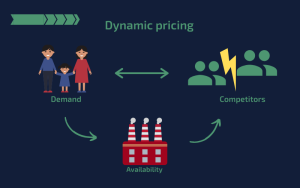
Fundamental Principles of Dynamic Pricing with AI
Dynamic pricing is a mechanism in which the price of a product is adjusted organically, based on factors such as supply and demand, competitive prices, seasonality, customer behavior, inventory availability and sales rate. Artificial intelligence systems are able to collect, analyze and process huge volumes of data in real time, allowing automatic decisions to be made regarding the price of each product.
The use of such models in Magento is possible due to the open architecture of the system, the ability to interface via API and the existence of indexing mechanisms that allow frequent price changes without burdening the performance of the e-shop. Artificial intelligence does not work with manually defined rules, but utilizes statistical prediction models, learning systems from historical data and continuous adjustment of its calculations.
Data Required for Automated Invoicing
AI systems that implement dynamic pricing rely on multiple types of data. Each piece of information allows the model to better understand market behavior, predict future trends, and adjust price in a way that maximizes profit margin or sales volume.
The following data are usually used:
- Historical product sales – include sales rate, peak demand days, price elasticity, and promotional periods.
- Stocks – the current stock volume, replenishment time and the risk of overstocking or shortages.
- Competitive prices – data collected through web scraping or market monitoring services.
- Supply cost – changes in suppliers' costs directly affect the minimum sustainable price.
- Visitor behavior – data such as dwell time, clicks, abandonments and browsing patterns.
- Seasonality and calendar patterns – e.g. Black Friday, Christmas or periods of low demand.
- Product categories – anything related to product positioning and the price expected by customers.
All of the above data can be pulled directly from Magento or imported via an interface with ERP, CRM, competition monitoring systems or marketing automation.
How AI Models for Pricing Are Trained
Training an AI pricing model follows a specific process. In the first stage, historical data is collected and cleaned of inconsistencies, recording errors, and outliers that can distort the calculations. Then, machine learning techniques are applied to understand demand and price patterns.
These models utilize:
- Regressions for price-demand analysis
- Neural networks for multivariate analysis
- Time series forecasting to forecast future sales
- Reinforcement learning for continuous price adjustment in real time
After training, the models are tested in a controlled environment (sandbox) to determine if the suggested prices are realistic, sustainable, and in line with the business goals. Once their accuracy and reliability are confirmed, the operation is moved to a production environment and makes real price changes within Magento.
Ways to Integrate AI Pricing in Magento
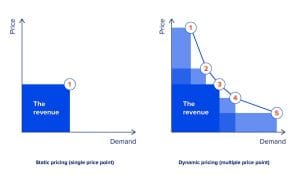
Automation can be implemented with various architectural options, depending on the technological requirements, available systems and the level of complexity of the business.
Integration via Magento API
One of the most common practices is to use Magento's REST or GraphQL API. The external AI system calculates the optimal prices and updates them to Magento with a frequency that can range from a few minutes to real time.
The API provides full access to products, pricing rules, special prices and group discount rules. Changes are integrated directly into the e-shop's pricing system.
Marketplace Extensions
There are extensions in the Magento Marketplace that offer built-in AI tools for dynamic pricing, although these are usually more simplified solutions. These are mostly based on rules rather than advanced mathematical models, but can be a foundation for smaller businesses.
Custom AI Engines with Server-to-Server Integrations
In more complex businesses, a specially designed AI engine is used, hosted on its own servers or cloud infrastructure. Magento connects to it via webhooks or cron jobs, so that data is constantly exchanged and price adjustments are made without human intervention.
Interface via ERP or PIM
In cases where Magento functions primarily as a frontend and the ERP or PIM is the central point of management, the invoicing is done in the ERP and transferred to Magento with APIs or connectors. The AI works at the ERP level and not Magento, but the result is displayed in the e-commerce platform.
How Automated Invoicing Works in Practice
The AI-powered dynamic pricing workflow follows structured stages, with each stage based on previous data and ongoing calculations.
Data collection
Data is pulled from Magento, ERP, CRM, tracking systems and competitor platforms. It is cleaned, formatted and stored in databases that can support a large volume of information.
Pattern Recognition
AI models detect relationships that may not be apparent to simple human observation. For example, they can understand which product is most likely to sell at a certain time of day or which type of customer responds most when the price is reduced by a certain percentage.
Forecasting Future Demand
Artificial intelligence estimates how many units will be sold, when inventory will run out, and what price will maximize either profit or sales volume.
New Price Calculation
Prices are calculated based on business objectives, such as:
- profit maximization
- quick stock clearance
- maintaining a competitive position in the market
- increase conversion rate
Magento Update
The new price is entered into Magento via API, cron or direct integration. Magento's indexing system is adjusted so that changes are quickly reflected to the customer.
Performance Monitoring
KPIs are measured, such as:
- sales increase
- margin improvement
- inventory reduction
- product clearance time
The model is retrained based on new data, so that it is constantly improved.
Automated Offers and Discount Rules with AI

In addition to the base price, AI mechanisms can generate personalized or opportunistic offers.
Personalized Offers
Guests receive different prices or discounts depending on:
- the previous behavior
- purchase history
- the possibility of abandonment
- the spending profile
Magento can create customer groups or cart price rules to apply these prices.
Real-time Offers
AI can trigger offers based on real events, such as:
- sudden increase in demand
- low stock
- need to promote a specific category
Controlled Discount Limits
The business sets a minimum profit. The AI is not allowed to give a price below this limit.
Business Benefits of Automated Invoicing in Magento
Integration offers significant advantages, such as:
- constant profit optimization
- reduction of manual interventions
- better inventory management
- quick adaptation to market changes
- reducing risk from bad pricing decisions
AI systems perform better as the volume of data increases, which means that in large e-shops the benefit is significantly greater.
Challenges and Limitations
Despite the many advantages, there are some challenges:
- need for sufficient data
- possibility of sudden price changes if there is no control
- technical requirements for integration
- need for operational restrictions to avoid excesses
AI systems must operate with auditing and logging to ensure that all calculations are transparent and auditable.
End-to-End Magento Implementation Process
The complete implementation process follows a specific sequence:
- analysis of current pricing policy
- historical data collection
- model training
- sandbox testing
- pilot application on part of the products
- full application
- monitoring performance indicators
- continuous optimization
The process can be completed in a few weeks to a few months, depending on the scope of the products and the quality of the data.
Future Trends
Artificial intelligence is expected to evolve even further in the area of pricing. Possible future possibilities include:
- full automation of pricing strategies throughout the product lifecycle
- customized prices by device or place of origin
- predictive stock depletion pricing
- dynamic discounts in real time to reduce cart abandonment
Conclusions
Magento pricing and bidding automation through artificial intelligence has now become one of the most advanced and efficient optimization tools for e-commerce businesses. The transition from static to dynamic pricing policies allows for the continuous adaptation of the commercial strategy to the real market data, reduces the need for manual interventions and enhances the accuracy of decisions. With the continuous exploitation of data, statistical modeling and the ability to predict future demand, a more flexible, competitive and profitable operation is achieved for every e-shop based on Magento.
Integrating AI into pricing requires systematic preparation, proper technical implementation, and continuous monitoring of performance indicators to ensure that the system is operating in a manner consistent with business objectives. As available data increases and models improve over time, the value of automated pricing is further enhanced, making it one of the most important elements of modern e-commerce.
To implement and interface dynamic pricing systems with artificial intelligence in Magento, it is possible to request support from specialized developers who have experience in automation, API integrations and custom AI applications.
Her team Fixit.gr is able to undertake the design, technical development and complete integration of such solutions, providing guidance from the initial stage to the operational implementation in a production environment. With the assistance of specialized technical consultants, it can be ensured that the price automation will operate with accuracy, stability and full compatibility with the needs of each e-store.