
Complete guide to Shopify inventory management for 2024.
With over a million registered businesses in 175 countries, Shopify is arguably the leading e-commerce platform of choice worldwide. These businesses leverage the flexibility of the Shopify platform and the tools it provides. One factor that greatly influences the success of any Shopify merchant is how they manage their inventory. This is an integral part of any e-commerce operation and can ultimately make or break the business.
Shopify merchants' failure to establish a streamlined process for accurately tracking inventory and ensuring that updates are reflected in their online stores can lead to disastrous consequences. Here's a comprehensive guide to inventory management on Shopify for 2024.
Why is inventory management essential for Shopify merchants?;
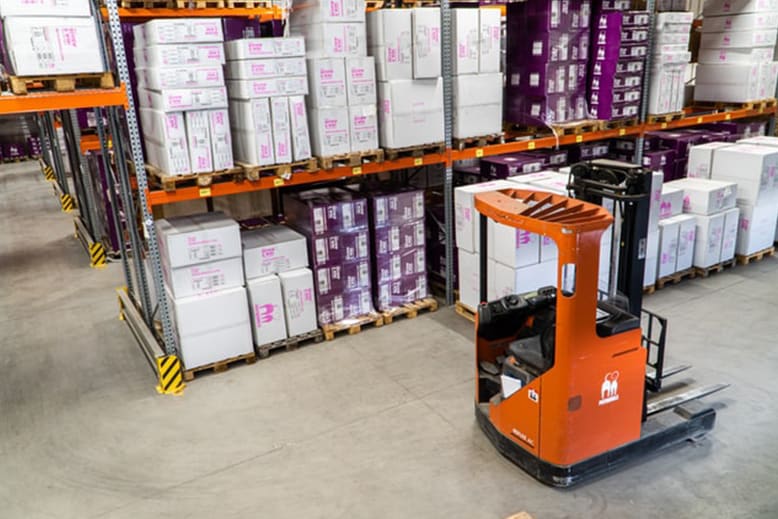
Inventory is essentially the number of products that are currently available for sale. By effectively tracking inventory, it is ensured that products do not run out and that items are replenished before they run out. This gives rise to the need for inventory management.
From spoilage to cancellations and returns, the effects of poor inventory management can ultimately take a toll on a Shopify store. Having a clear and accurate picture of a Shopify store’s inventory can ultimately prevent losses that typically result from poor management. High-quality inventory management will help reduce overall costs, optimize fulfillment rates, improve service delivery, and position the store for rapid growth in the future. If further assistance is needed with Shopify technical issues, a Shopify technical support specialist can be hired. Shopify developer for project execution. Leading companies and startups hire dedicated Shopify freelancers for their critical software projects.
Inventory management generally helps Shopify stores and other ecommerce businesses achieve the following:
Obtaining valuable information for insights.
Inventory management can help provide Shopify store owners with reliable information, especially for restocking when a product is out of stock. This is essential as research shows that 30% of customers believe that out-of-stock products hurt their shopping experience. Similarly, many shoppers are likely to purchase a similar product from another store when the product they are looking for is out of stock.
Stock trends.
Inventory management software can help accurately identify trends in inventory turnover and calculate how much inventory to order, preventing overstock problems.
Automation of repetitive tasks.
Repetitive tasks like tracking products and manually updating inventory can be time-consuming. Shopify inventory management software can help automate these tasks and allow your business to focus on more productive matters.
Inventory tracking.
As mentioned above, inventory management solutions can help automate and track inventory for Shopify stores. A reliable solution will help you track orders, inventory purchases, and fulfillment in detail.
Integrations.
If other applications are already used in a Shopify store, an inventory management solution should allow for seamless integration of these applications.
Sales forecast.
The ability to make accurate estimates about sales trends and growth rates is one of the main reasons for adopting Shopify inventory management software for stores.
Real-time reports and analytics.
A top-notch inventory management application will allow for the creation of data-driven reports and analytics to guide areas of improvement and determine if the strategy is working.
Does Shopify have built-in inventory management?;
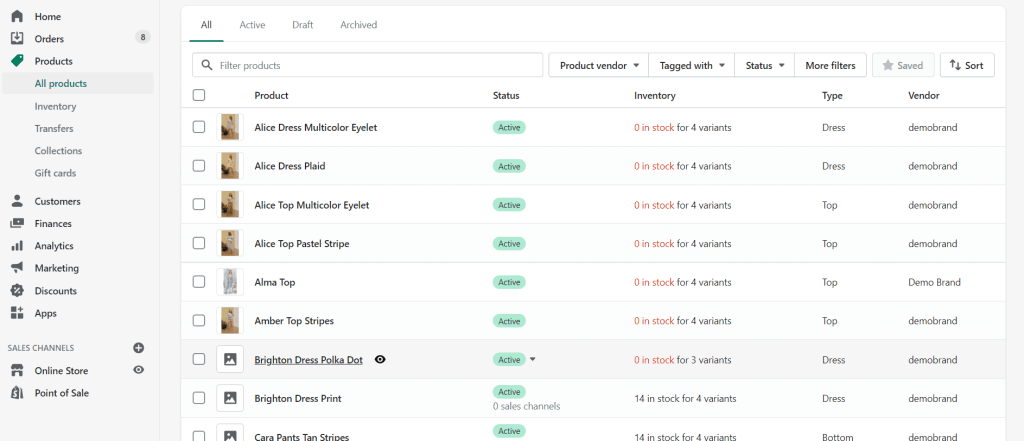
The answer to this question is «Yes.» One of the many reasons why Shopify is so popular among ecommerce businesses is its inventory management capabilities. Shopify’s built-in inventory management offers a limited number of features and capabilities, including:
Inventory tracking.
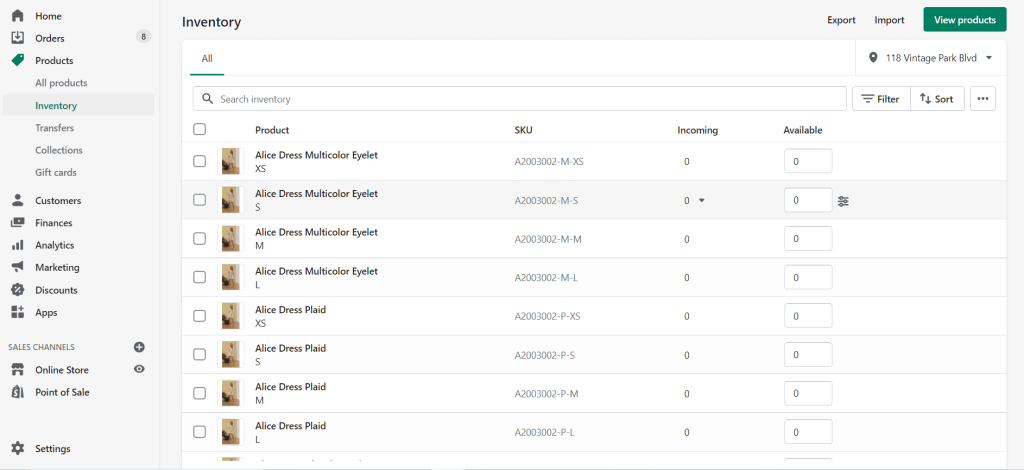
This feature allows Shopify store owners to view their product inventory and sort products using filters.
Stock updates.
This allows users to manually adjust their inventory count for different products or variants.
Census history.
The inventory history feature allows Shopify merchants to see the history of adjustments made to their product inventory over time.
Stock transfers.
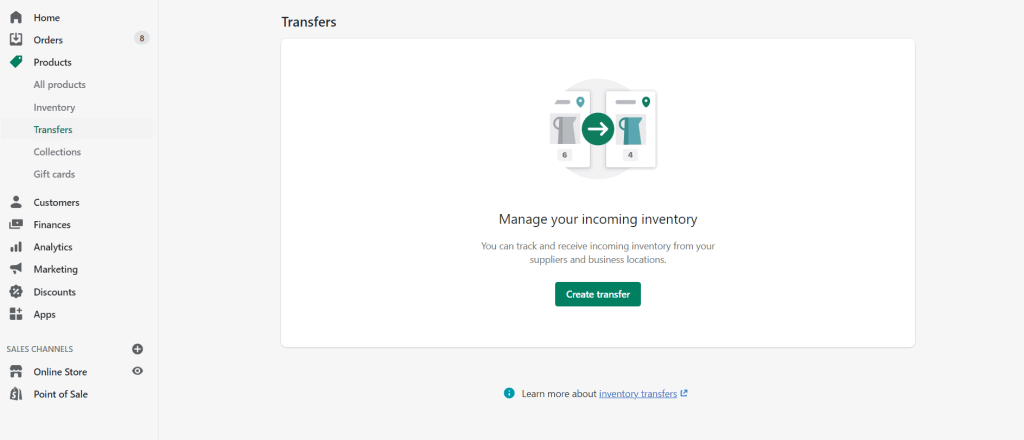
This feature allows users to manage inventory transfers from suppliers or between locations.
Shopify undoubtedly offers lightweight inventory management, which can be suitable for small, single-channel ecommerce businesses. However, the importance of a comprehensive inventory management tool for the success of any ecommerce business, including Shopify stores, should not be underestimated.
For example, Shopify merchants implementing a large omnichannel strategy will quickly realize that the built-in inventory management features may be grossly inadequate for their business needs. However, it also offers many benefits.
Related articles: WooCommerce Vs Shopify (Comparison 2023)
Top benefits of Shopify inventory management.
Shopify has remained popular over the years for the many benefits it offers to merchants. For example, its core functionality allows users to track inventory for each product listing. The platform’s basic inventory management capabilities can be useful for businesses that purchase finished products directly from their suppliers and don’t require complex inventory management activities.
However, as ecommerce businesses scale towards an omnichannel strategy, they can integrate with other Shopify inventory management solutions to automate their omnichannel operations and gain actionable insights about their stores on Shopify and other marketplaces.
Inventory tracking for each product list.
Individual product lists can be easily created and sorted by category, type, and a few other filters. All of these product lists have an inventory that can be updated manually.
Inventory management for product variants.
Multiple product variations can be easily created and managed from a single window. These variations could include the size, colors, pricing, and even weight of your Shopify store products.
Mass inventory processor.
Shopify's inventory editor allows you to adjust inventory quantities for products in bulk. Bulk inventory updates can also be applied to multiple product variants across your store.
Inventory transfer.
This feature allows for the management of inventory transfers between warehouses and suppliers. A key challenge with Shopify’s inventory management functionality is that while it can help with the transfer of inventory between locations, it does not allow for the transfer of products that need to be fulfilled by third parties or third-party services. This can be seamlessly circumvented by using an integrated inventory management service.
Census history.
This allows you to view the history of inventory updates. The data provided includes the date the update was made and the products updated.
Key challenges of Shopify inventory management.
Basic Shopify inventory management can be a challenge, especially for ecommerce businesses with complex supply chains and workflows. It's vital to find solutions to these situations before they cause damage to the business.
Multi-channel functions.
Brands implementing a multi-channel strategy need a single view of inventory and analytics across all of these channels. They need the ability to adjust how their inventory is distributed and make predictions about the profitability of their SKUs. This is an essential capability for measuring product performance on platforms and marketplaces beyond Shopify, such as Amazon and Etsy.
However, these omnichannel features are not built into Shopify. To enable these features for a Shopify store, a solution from the Shopify app store or an advanced inventory management tool must be used. Tools like these will ultimately streamline the inventory management experience with Shopify.
Automated stock replenishment.
As a Shopify store grows and manages more SKUs, the replenishment process becomes more demanding. Creating more SKUs increases the chance of stockouts and miscounts.
The challenge with Shopify or any other e-commerce platform is finding a system that can help track inventory and automatically create purchase orders to avoid stockouts. This system should ideally use business intelligence from order history and trends to suggest appropriate quantities and potentially help eliminate errors.
Some products may not be integrated.
Shopify has an extensive list of product restrictions that can sometimes complicate inventory management on the platform. These restrictions mean that some products may not integrate with Shopify. This is perhaps the biggest obstacle to using Shopify’s built-in inventory management system. Also, manually implementing multi-channel inventory due to this lack of integration with some products can be somewhat difficult.
Related articles: 15 Shopify Tips for Success in 2024
Is Shopify inventory management software right for business?;
Like any other software solution, it must be determined whether it is a good fit for the business before adoption. Current and future requirements must be assessed to determine if the solution is a good fit for the business. It should also be checked whether any of these solutions solve unique challenges «out of the box» or with as few customizations as possible.
Here are some typical challenges that confirm a business's need for a comprehensive Shopify inventory management solution.
Improved flexibility.
Using spreadsheets for inventory management can be very inflexible. If team members can’t access real-time data or add more capabilities to the inventory management process, it’s likely that an upgrade to an inventory management solution will be necessary.
Increased expenses.
Human errors can be very costly, and this is very common with the use of spreadsheets. If team members are having difficulty keeping track of inventory for any list of products at any given time, an advanced inventory management system is required.
Reduction of inventory costs.
The consequences of poor inventory management can be significantly costly to a business. For example, failure to accurately forecast inventory trends could lead to overstocking, resulting in higher holding costs and other related expenses. Consistent failure to prevent stock-outs can also sometimes be attributed to poor inventory management practices. A reliable inventory management solution will help predict inventory trends and stock only the necessary inventory.
Acceleration of growth.
Constantly writing manual reports instead of spending time on more productive tasks, or team members constantly reaching out to the warehouse for inventory questions, can have a negative impact on sales. This indicates poor inventory management and the need to upgrade to an advanced inventory management solution.
Types of inventory management systems.
The type of inventory management solution adopted is critical in determining the success of an e-commerce business. Here are the main types of inventory management systems commonly available to e-commerce businesses:
Spreadsheets.
Spreadsheets can be a low-cost means of inventory management for small businesses with minimal requirements and on a basic scale. However, this method of inventory management offers no flexibility and accuracy can easily be compromised. Spreadsheets are prone to human error, which can easily lead to costly problems. Despite their outdated nature, their low cost and ease of setup usually make them attractive to small businesses with simple needs.
Basic inventory management systems.
Basic inventory management is usually available as part of some cloud-based applications and allows you to track and control product inventories without installing a new software solution. While solutions like these are somewhat better than spreadsheets, their lack of customization usually means that businesses must still use spreadsheets for more specific tasks.
Special inventory management systems.
Dedicated inventory management systems are purpose-built to help track and control inventory. When the system is cloud-based, it can effectively allow for integration with other services already in use. For example, a cloud-based apparel inventory management solution provides a complete service that allows for integration with extensive capabilities.
Warehouse management systems.
Warehouse management systems are different from inventory management systems. They are, however, vital to the success of warehouse operations. A warehouse management solution is designed to make the warehouse team operate more efficiently.
Related articles: Magento Vs Shopify. The great eCommerce battle.
Enterprise resource planning systems.
An enterprise resource planning (ERP) software solution covers virtually all aspects of business planning. This saves the cost of subscribing to multiple inventory management and business planning solutions that could add up significantly. An ERP software solution typically unlocks more advanced features that ultimately improve operations and seamless scalability.
The contribution of a Shopify developer will be able to prevent possible damages to the business because best practices for managing the online store and inventory based on personalized needs will be implemented from the beginning.