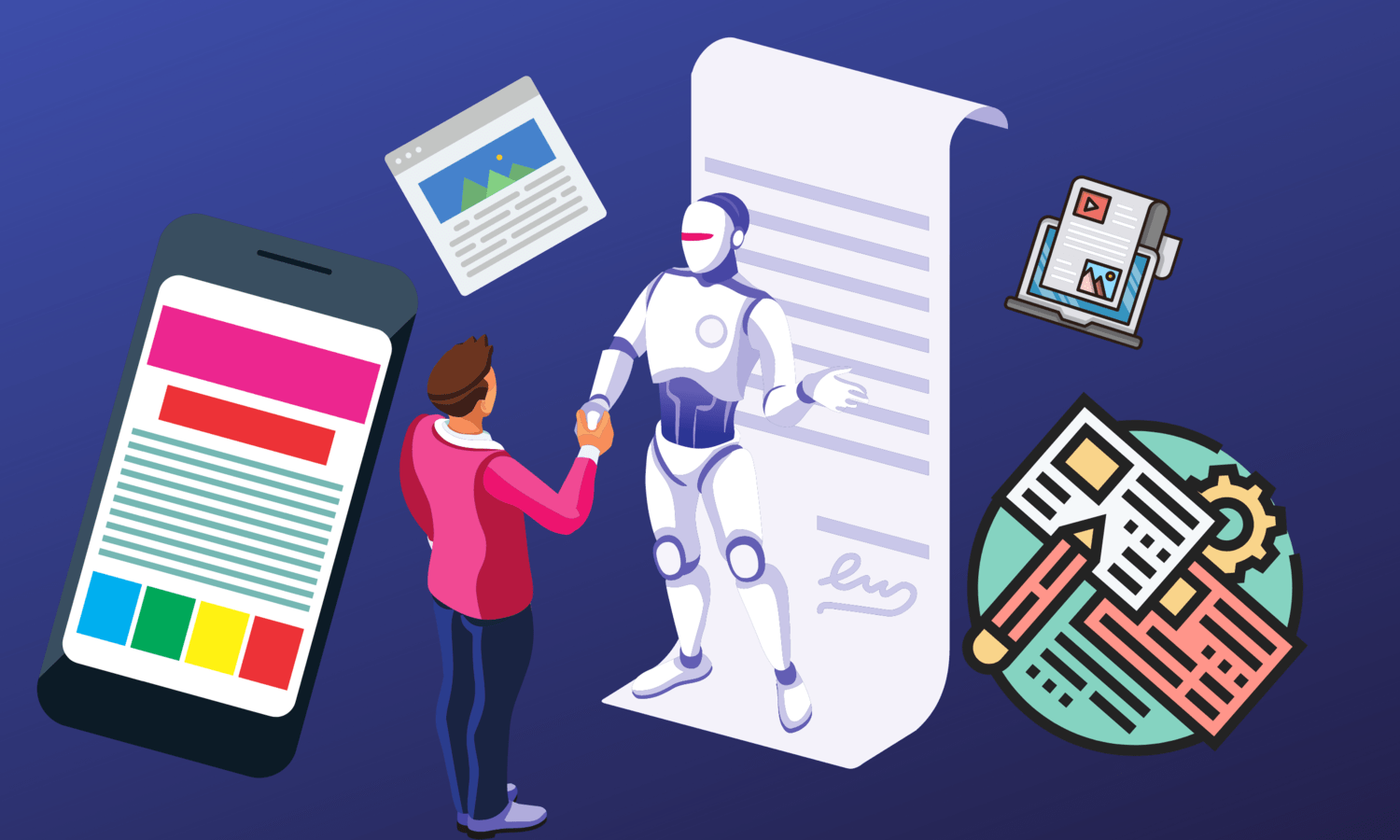
Advantages and disadvantages of using artificial intelligence for content creation.
In recent years, artificial intelligence (AI) has rapidly transformed various fields, including content creation. From news articles, social media posts, product descriptions, to video scripts, AI is being used to create all kinds of content. However, like any technology, AI has its own advantages and disadvantages. This article will delve into the advantages and disadvantages of using AI for content creation.
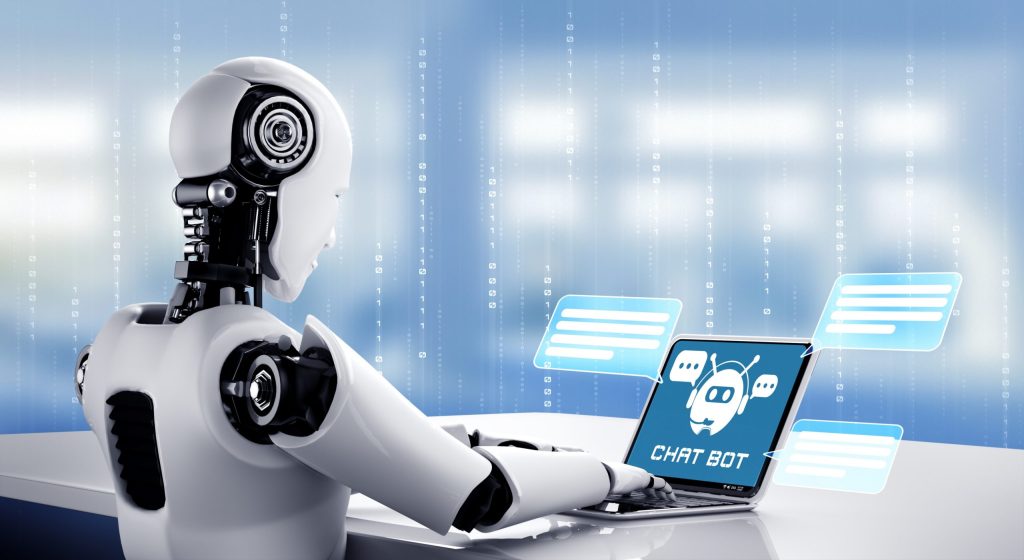
Advantages of using AI for content creation.
- Efficiency and speed:
Artificial intelligence algorithms can create large volumes of content in a fraction of the time it would take a human writer. They are able to work 24/7 without interruption, allowing companies to maintain a consistent online presence and respond to user queries.
- Scalability:
AI is capable of producing thousands of pieces of content at once, offering a scalable solution that meets the needs of businesses of all sizes. With AI, large amounts of content can be created, processed, and published quickly, which is especially useful for industries that require high-volume content.
- Finances:
In the long run, AI can be more cost-effective than hiring a team of writers, especially for companies that need a large amount of content. By automating the content creation process, businesses can free up human resources for other strategic tasks.
- Personalization:
AI can analyze data from users and use it to create personalized content. This personalization can help businesses interact more effectively with their audience and offer a more tailored user experience.
- Multilingual ability:
AI tools can easily translate content into multiple languages, helping businesses reach a global audience.
Disadvantages of using AI for content creation.
- Lack of creativity and emotional depth:
While AI has made significant strides in understanding and creating human language, it still lacks the nuance, emotion, and creativity that a human writer brings to their work. Content created by AI can sometimes feel cold, mechanical, or impersonal.
- Misinterpretations and errors:
Despite its advanced capabilities, AI can misunderstand context and subtle details, leading to inaccurate or misleading content. It can struggle with complex instructions or topics outside its training data.
- Over-reliance on data:
AI algorithms are highly dependent on the quality and quantity of data fed to them. Poor quality data can lead to poor quality content. Furthermore, AI may not be able to write about topics it has not been trained on.
- Ethical and legal concerns:
There are concerns about plagiarism and copyright infringement, particularly when AI is used to scrape and repurpose content from the web. AI also raises ethical issues about job displacement, as it automates tasks traditionally performed by human writers.
- Impersonal touch:
While AI can create personalized content based on data, it may lack the human touch that resonates with readers on an emotional level. It may not be able to build a connection or rapport with the audience the way a human writer can.
Epilogue.
While AI brings efficiency, scalability, and cost-effectiveness to content creation, it still has limitations when it comes to creativity, contextual understanding, and personal touch. Therefore, the best approach may be to leverage AI in conjunction with human creativity and judgment. AI can be used to do the heavy lifting – generating designs and ideas, while humans can refine and add the emotional depth, creativity, and personal touch that AI currently lacks. The future of content creation could very well be a harmonious combination of AI and human creativity.