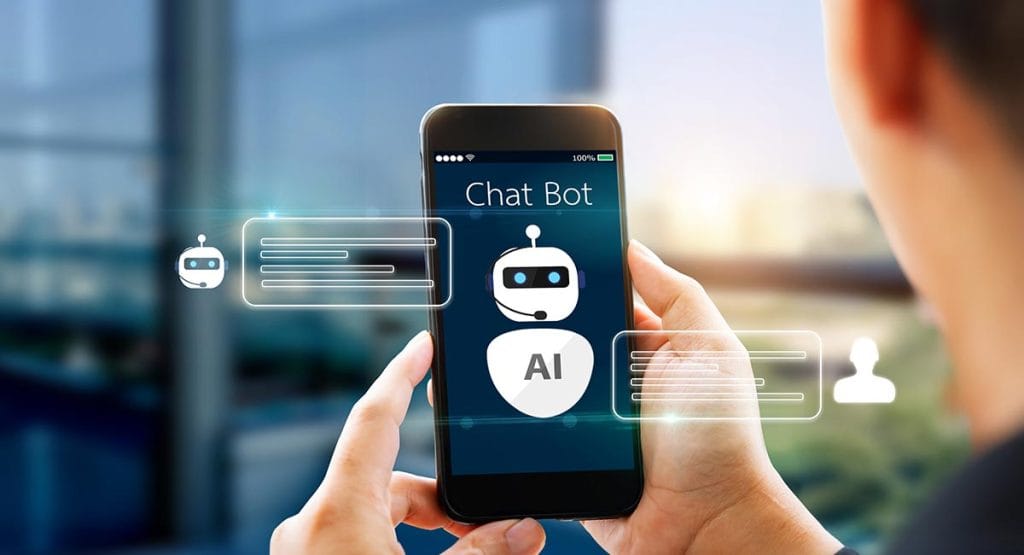

The adoption of AI Agents in e-commerce platforms is accelerating rapidly, as a significant impact on customer experience and operational efficiency is being observed. Within the WooCommerce environment, the utilization of autonomous artificial intelligence systems is becoming established as a practice for automating customer communication, providing 24/7 service, and supporting sales at an integrated level. The transition of businesses from the traditional manual service model toward autonomous digital interactions is now considered expected and is characterized by steady growth.
Artificial intelligence is being integrated into WooCommerce with the aim of providing more targeted, immediate, and consistent service without the need for human presence. AI Agents leverage business data, order history, real-time inventory information, and customer profiles to create an ecosystem of automated actions that respond to, guide, and support every user within the online store. At the same time, a significant reduction in operational workload for support departments is being observed, while the quality of information provided remains consistently high.
This practice is being reinforced by advancements in artificial intelligence, as response accuracy is maximized and the ability to adapt to business needs is upgraded. In large-scale e-shops, the implementation of AI Agents is considered an integral part of service upgrades following rapid growth, while smaller businesses are also adopting the technology to increase sales without the need for significant investment in human resources.
This article presents in detail how AI Agents function within WooCommerce, which data is utilized for their training, which processes are covered automatically, how integration is performed, what requirements are necessary for successful implementation, and what operational impacts are observed in real-world e-commerce environments.

The Role of AI Agents in WooCommerce
The introduction of AI Agents in WooCommerce leads to the creation of an automated service layer that operates continuously and responds to every user interface without time delays. Their role is defined by the needs of each individual business, but typically includes:
- Providing instant answers to frequently asked customer questions
- Guidance through the purchasing process
- Managing information regarding shipments, weights, and delivery times
- Post-sales support via order updates
- Resolving simple issues without human intervention
- Product promotion based on user history
- Product recommendations through preference analysis
- Pre-qualifying leads for specialized services
- Managing return, exchange, or cancellation requests
- Updates regarding stock and availability
All of the above functions are achieved without manual processes and without requiring staff to cover repetitive touchpoints. For businesses operating in high-volume communication environments, the adoption of AI Agents proves to be decisive, as it achieves significant decompression of support departments.
A key characteristic of these systems' operation is that responses are generated with consistent quality, while case management is carried out based on rules shaped by business logic. Consequently, it is ensured that every user receives stable information without deviations.
How AI Agents are "Trained" with WooCommerce Data
The operation of AI Agents is based on understanding and utilizing e-shop data. To achieve this, a training process is carried out which draws information from:
Product Content
Technical specifications, descriptions, attributes, photos, SKUs, and every other piece of information available in WooCommerce are used to create product knowledge. Thus, each agent gains the ability to:
- Product presentation based on needs
- Comparing options
- Pricing and discount updates
- Analysis of dimensions, materials, and technical details
Order History
Purchase history is utilized to analyze customer behavior. Through this:
- Common purchasing patterns are identified
- Products related to previous purchases are recommended
- Needs are predicted based on purchasing frequency
Inventory Information
Inventory data allow agents to:
- Provide updates on availability
- Suggest alternatives when there is a shortage
- Guide the customer to products that are immediately available
Store Policies
Returns, warranties, shipping, delivery times, and exchange policies are integrated into the agent to provide clear, error-free answers.
Frequently Asked Questions
Existing FAQs retrain the agent to recognize common question patterns and provide optimized answers.
Specialized Documents
Manuals, technical instructions, product certifications, and supporting material are integrated to provide detailed answers to more complex inquiries.
With this dataset, an automated “digital representative” is created that faithfully represents the e-shop and conveys all necessary information in real time.
How AI Agents Use Data in Practice
Μετά την εκπαίδευση, ο AI Agent λειτουργεί μέσα στο WooCommerce σε διαρκή σύνδεση με τα δεδομένα του καταστήματος. Αυτό σημαίνει ότι όλες οι απαντήσεις βασίζονται σε δεδομένα πραγματικού χρόνου:
- If a product's price changes, the new price is displayed.
- If a new product is added, it becomes immediately available through the agent interface.
- If a product sells out, the user is updated without delay.
Customer interaction is shaped based on their browsing history and behavior on the site. In this way:
- What has been viewed is analyzed.
- Interest in specific categories is identified.
- Related products are suggested.
- Bundles are promoted.
- Discounts or alternative options are highlighted.
At the same time, the system can create "resolution scenarios":
e.g., when attempting to find the suitable product, the agent guides the user through successive questions to identify the product that meets their needs.
Integration of AI Agents into WooCommerce
Implementation is carried out through specific stages that ensure proper operation and reliability:
Business needs analysis
A full record of the e-shop's goals, customer touchpoints, product types, and the required level of support is conducted.
Service flow definition
Interaction scenarios are selected:
- Order support
- Shipping updates
- Product search
- Returns management
- Technical questions
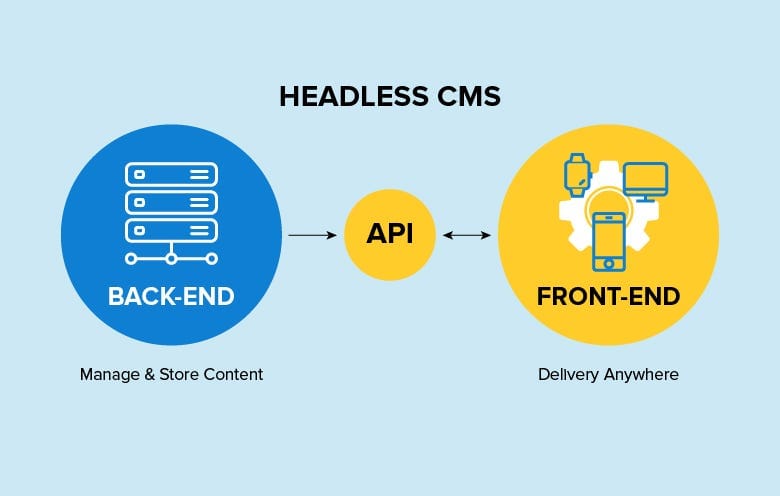
WooCommerce Integration
Connection is established with:
- REST API WooCommerce
- Databases
- Content repositories
- Product libraries
- Inventory information
Agent logic configuration
Rules integration:
- What happens when a user requests an out-of-stock product
- How are warranty inquiries handled
- How is the user transferred to a human agent
Accuracy check for responses
Information consistency is verified against actual WooCommerce data.
Monitoring & optimization
Continuous evaluation of conversations, identification of failure points, and refinement of operational rules are performed.
Practical Operation in Daily Use
In practical operation, the AI Agent is responsible for managing:
Pre-sale inquiries
Inquiries such as:
- "Which size is right for me?"
- "What is the difference between these two models?"
- "Is there a discount on a specific category?"
Order status updates
The agent provides:
- tracking
- Shipping status
- Estimated delivery time
- Shipping information
Returns & exchanges management
Return policies are executed automatically:
- Issuance of requests
- Rule-Based Approval
- Providing instructions to the customer
Product recommendations
Product recommendations are suggested via behavior analysis:
- related to their needs
- complementary
- on discount
- more suitable than the current selection
Cross-selling & upselling
Based on history:
- a more expensive model is recommended
- bundles are displayed
- personalized promotional actions are triggered
Business Benefits
Adopting AI Agents in WooCommerce leads to:
Continuous 24/7 service
Customer communication continues without time constraints.
Reduction of Support Workload
60%–80% of inquiries are handled autonomously.
Increased Conversions
Buyers are directly guided to the most suitable product choice.
Improved User Experience
Users receive instant assistance without waiting.
Information Consistency
Responses remain consistent without human error.
Personalized Recommendations
User needs are approached based on real-time data.
Improved Operational Efficiency
Support departments now focus on complex cases.
What is Required from the Business
For successful implementation, the following is required:
- Updated product content
- Defined shop policies
- Clear category structure
- Full documentation of support flows
- Clear description of business goals
- Presence of an active and accessible WooCommerce REST API
- Access to order and inventory data
- Availability of technical documents where required
In complex implementations, collaboration with a specialized development team is essential.
Implementation Stages from Start to Finish
Implementation is carried out through the following stages:
Preliminary analysis
The current status of the e-shop is fully documented.
Architecture design
The data connection methods and business logic are formulated.
WooCommerce data extraction
Products, orders, policies, and all necessary content are retrieved.
Agent training
The agent is trained on products, procedures, policies, and FAQs.
Creation of service scenarios
Service flows are developed:
- Product recommendation
- Return
- Order error
- Technical specifications
API integration
Connection is established for:
- Order status
- Inventory levels
- Price updates
- Availability check
Quality controls
Response consistency is tested.
Launch
The agent is installed on the site and activated.
Continuous optimization
Continuous upgrades are implemented based on real-time feedback.
Future Evolution of AI Agents in WooCommerce
Technology evolution is expected to lead to:
- fully autonomous ordering processes
- dynamic pricing via AI
- predictive restocking
- total automation of after-sales
- higher natural language understanding (NLU)
- predictive returns analysis
- full integration with ERP / CRM
- active real-time behavior analysis
- automation of email marketing & remarketing flows
Conclusion
The utilization of AI Agents in WooCommerce has already become a core element of the modern e-commerce experience. Automated support, immediate customer communication, 24/7 operation, and the optimization of the shopping journey significantly enhance e-shop efficiency and improve overall business performance.
The success of implementation depends heavily on proper integration, accuracy in agent training, clean data architecture, and professional management of service scenarios. As artificial intelligence evolves, businesses investing in the automation of this sector stand to gain increasing benefits.
For the implementation of AI Agents in WooCommerce and the configuration of a fully automated support and sales experience, the development team at Fixit.gr provides the design, integration, and technical deployment in real-world business environments. Contacting us allows for the assessment of your requirements and the tailoring of the solution to the specific needs of each e-shop.